Roots, Then Wings: A Primary Graduation in Five Languages

The first voice on stage belonged to a boy who had rehearsed his line for a week. He said good evening in English, then in Japanese, then in German, and the audience — mostly parents, who had heard the same sentence at home a hundred times — laughed and applauded each time. By the fifth language, the hall had understood the evening’s argument before a single speech was made.
The 2026 primary graduation at HFLA was staged under the title “Our Roots, the World’s Flowers”, and it belongs to the two streams that spend six years learning in more than one tongue: the multilingual classes and the Carden classes. They arrived as small children who could do little more than greet an adult; they leave able to hold a conversation, tell a story and, on this evidence, sing in five languages without a script in sight.
This was not the usual school pageant of delegated parts. The programme was built as a narrative in five chapters — where the dream starts, the seed of language, finding the Chinese root, growing through setbacks, and finally China speaking to the world — and each act argued for the next.
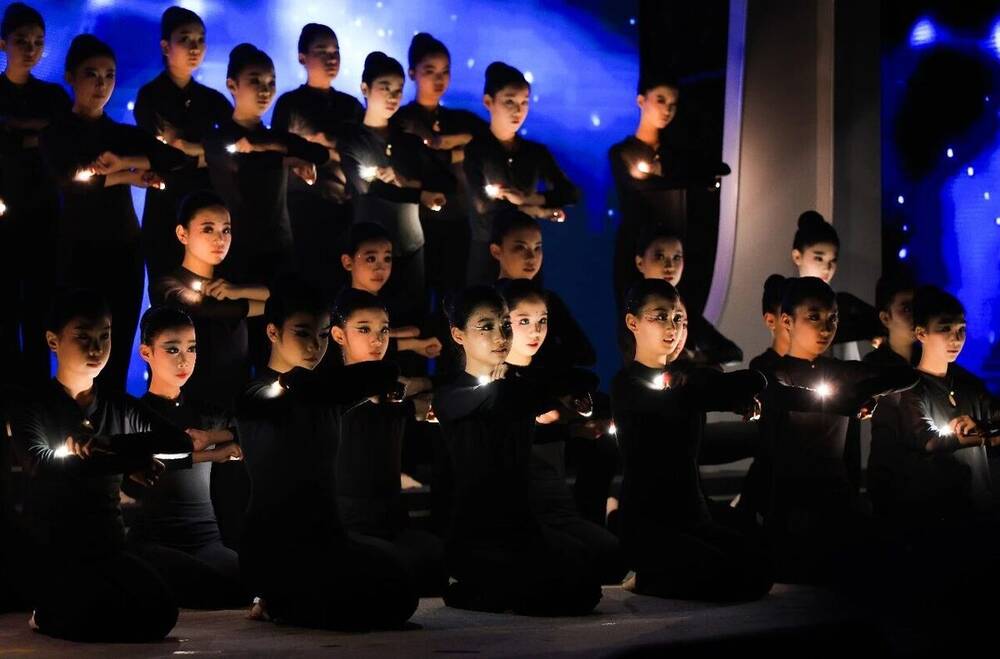
The opening scene replayed the first day of language class — a teacher writing a single foreign word on the board, a room of small children repeating it badly. A dance called Light followed, then the song The Brightest Star in the Night Sky in five languages at once, the melody passed from row to row like a baton.
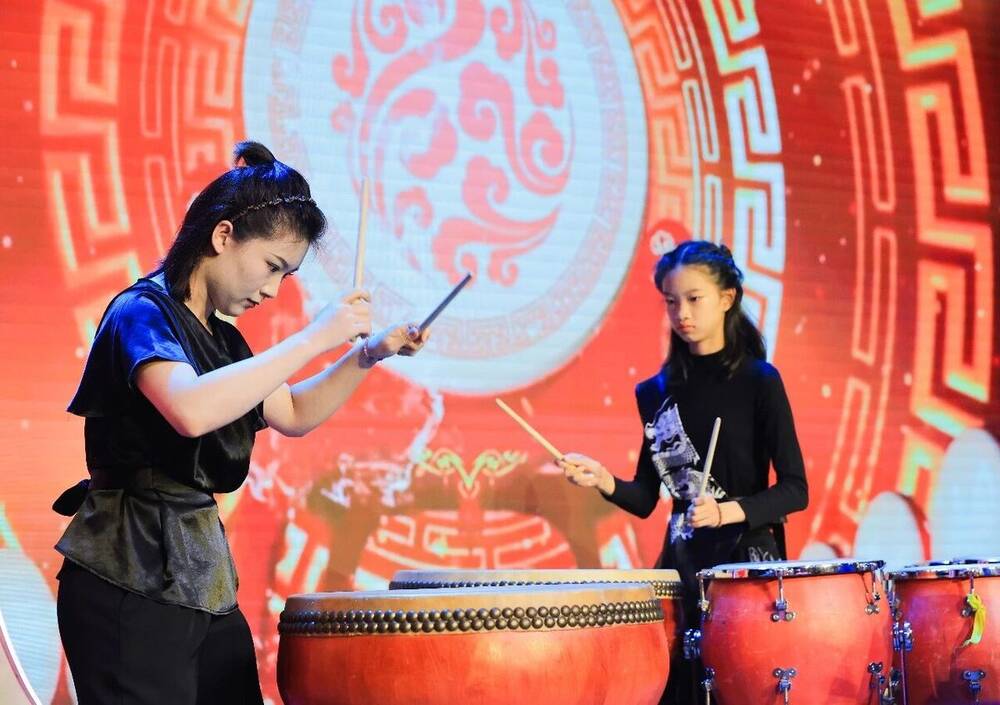
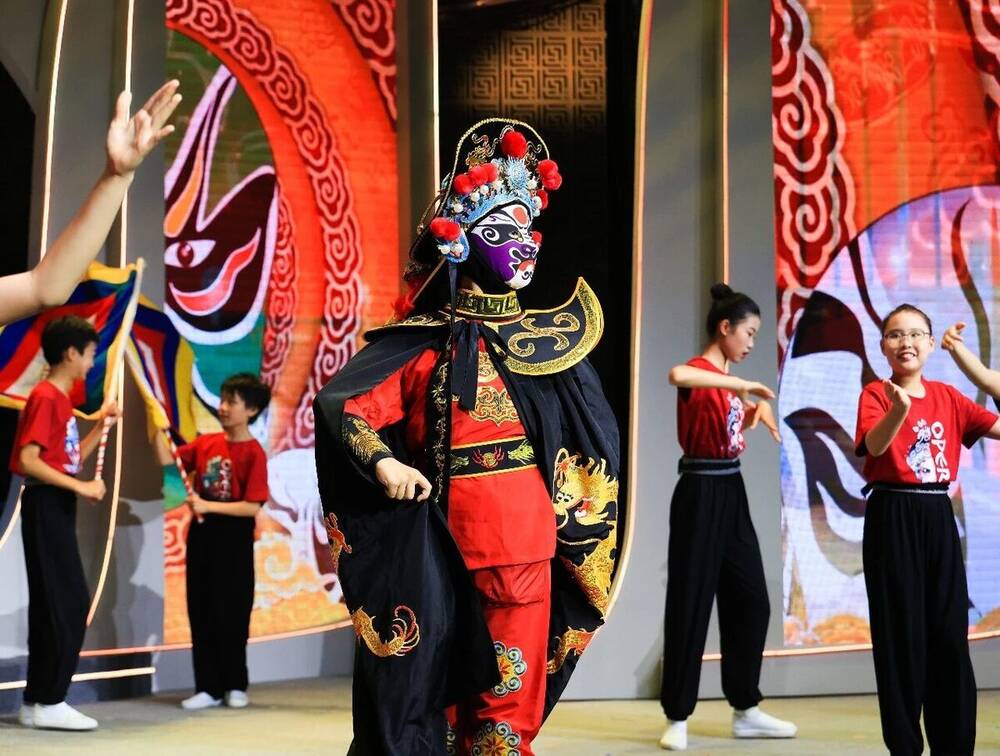
The second half belonged to the root. Two drummers took the stage for Dragons Leaping, Tigers Springing, a folk piece that begins quietly and then, without warning, becomes very loud. Peking opera came next: painted faces, jewelled headdresses, a company of primary pupils performing New Voices from the Old Stage with the timing of a much older troupe. And then A Great River, danced in long blue sleeves that turned the stage into moving water.
“A school with a foreign-language name has to be careful about which way it faces,” said Huang Ruihua, executive president of the education group and principal of the primary school, in her address. “We plant the root first. Then we open the window. One more language is one more world — but you can only carry a world if you know where you come from.”
The third chapter was the one the parents had not expected. Its subject was failure: a musical number called When I’m Gone, a comic poem titled Middle School Dream, and a stage adaptation of Inside Out in which the emotions of a graduating child argue in public. The children played embarrassment, envy and fear without flinching, and the segment landed as something more uncomfortable than comedy.
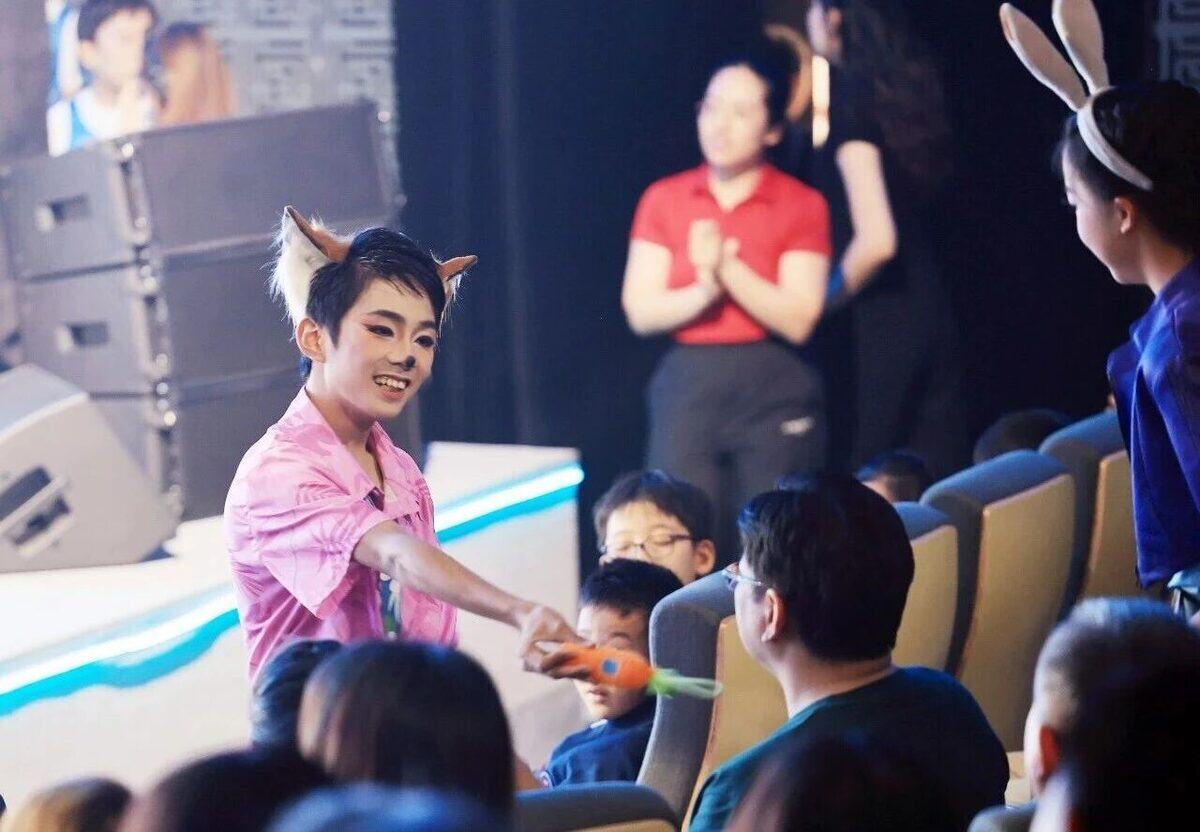
Later came a song medley called Roots and Wings, a Zootopia dubbing sketch in several languages, a basketball routine that got the loudest reaction of the first half, and a recitation that gave the evening its title. The choir closed with the school song, We Set Sail.
Between acts, class teachers from Grades 6.2 to 6.9 walked on to give a short message to their own rooms — two minutes each, no lectern, no notes. The certificates were handed out the same way, class by class, so that every child crossed the stage alone and every parent could find their own child in the crowd.
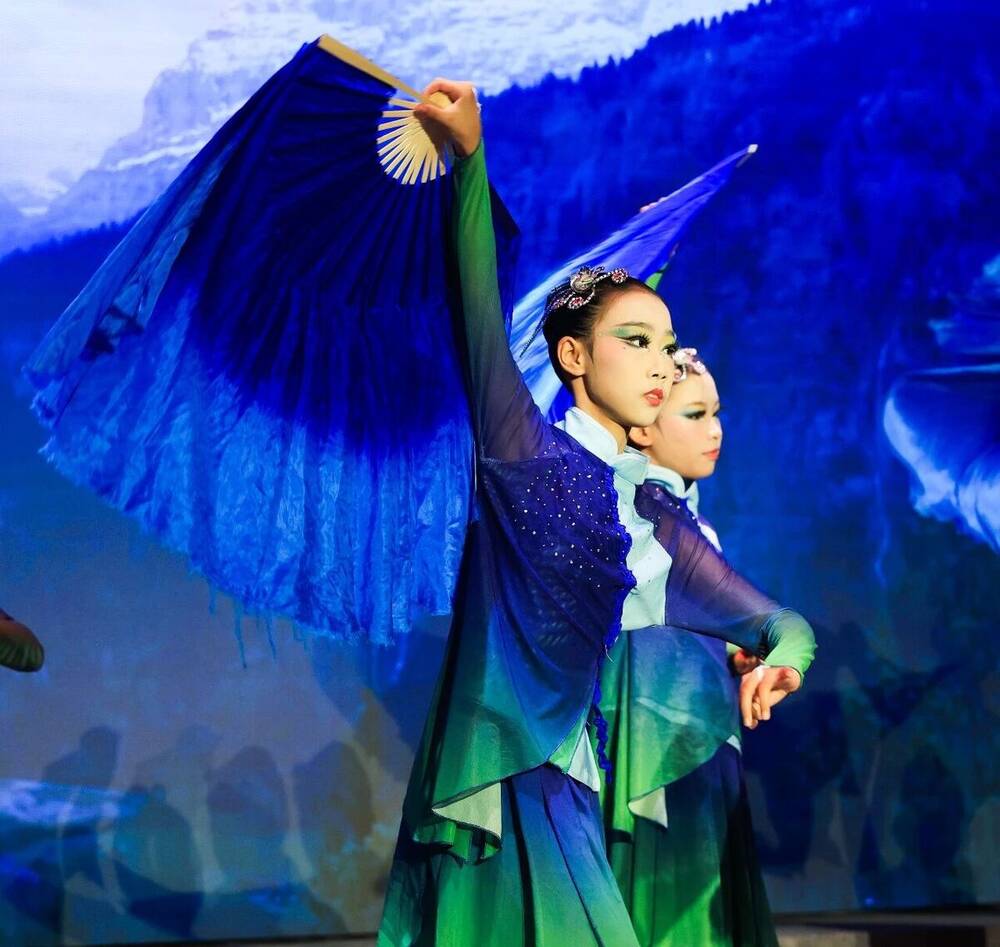
Afterwards, in the corridor, the performers were still in costume and slightly stunned, the way children are when a thing they have practised for months is suddenly over. A girl in a blue sleeve was correcting her own pronunciation under her breath, still working, seconds after the last note. In September she starts middle school, where the languages continue and the root is expected to hold.