Lucky Stiff: The Class of 2024 and the Luck They Made Themselves


A shoe salesman is closing up a shop that has nothing left in it when a lawyer arrives with a will. An uncle he barely knew has died and left him a fortune — on one condition. To collect it, Harry must take the body abroad and complete his uncle’s list of wishes, in order, with witnesses.
That is the premise of Lucky Stiff, the musical the Class of 2024 chose for its graduation production, and it is a machine built for exactly the kind of chaos a school show can turn into an asset: a corpse that has to be moved, a charity lawyer chasing the same inheritance, a mistress with a gun, a brother with no nerve, and a casino floor where everybody’s plan collapses at once.
The class took the farce seriously. Directors Fu Rao and Lu Qihang cut the script to what their students could inhabit, threw out the dubbed-film register that Chinese adaptations of American musicals often fall into, and rewrote the dialogue as colloquial comedy. They also built in a small climax roughly every ten minutes — a dance break, a running gag, a physical bit — so that an audience of teenagers would not lose focus in the second hour.
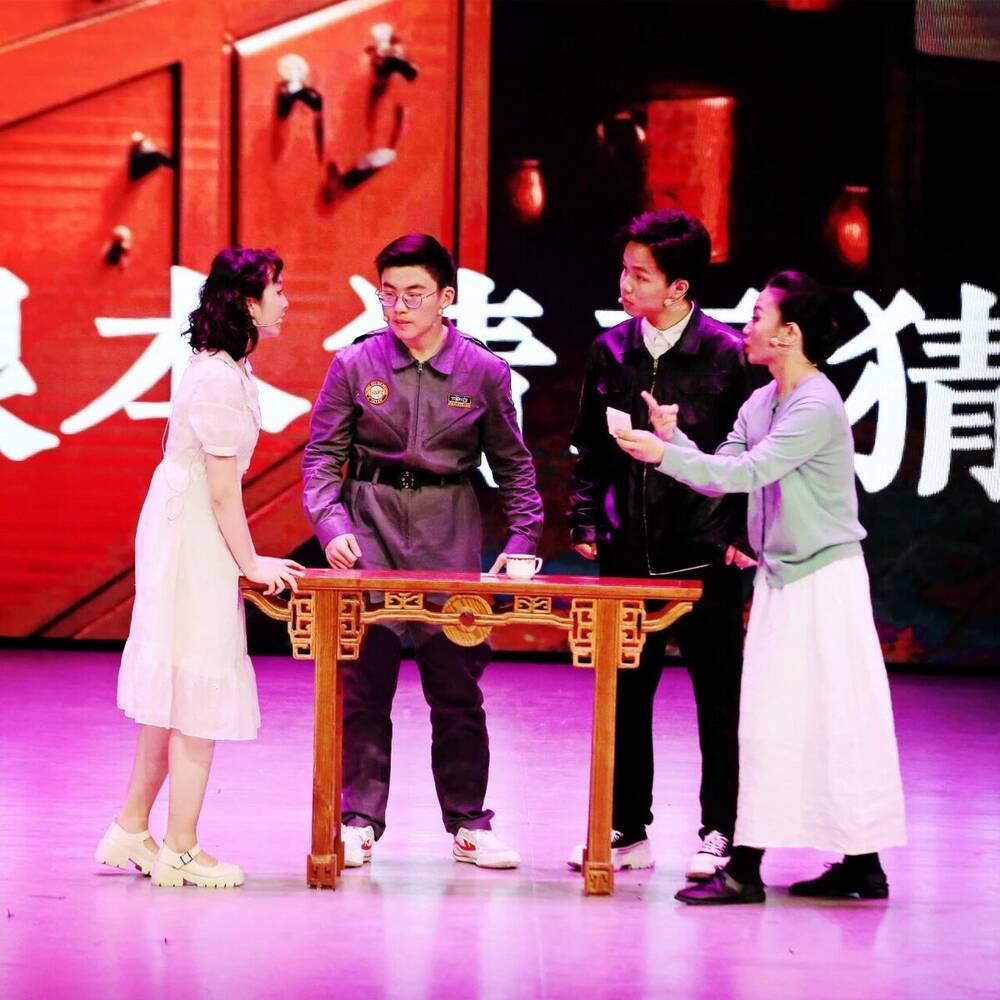
Two staging ideas did most of the work. In the “find uncle” sequence, the directors used a three-dimensional arrangement: several groups of actors occupy the same stage at the same time, each unable to see the others, so the audience watches near-misses stack up. And in the nightmare number, the ensemble added tap to the choreography, a nod to the old Hollywood musicals the show is imitating.
Almost none of the cast had done musical theatre before. Li Yumo, who plays Harry, describes the difficulty as one of rhythm rather than lines. “The rhythm is the soul of a musical,” he said. “Even in the scenes where nobody sings, you are keeping time. If you lose it, you turn your back to the audience without noticing.” He built the character from his own reactions: in the first-act solo, he asked himself what he would actually do if a lawyer appeared with an inheritance and a corpse.
Liu Yiyi, who plays Annabel, chose the part for a reason that has nothing to do with theatre. “She works as legal counsel for a stray-dog charity,” she said. “I love dogs. That was the whole argument.” What she found harder was the character’s stiffness — a woman who lives by rules and is quietly furious about it — and the small flashes of temper that make her funny rather than merely prim.
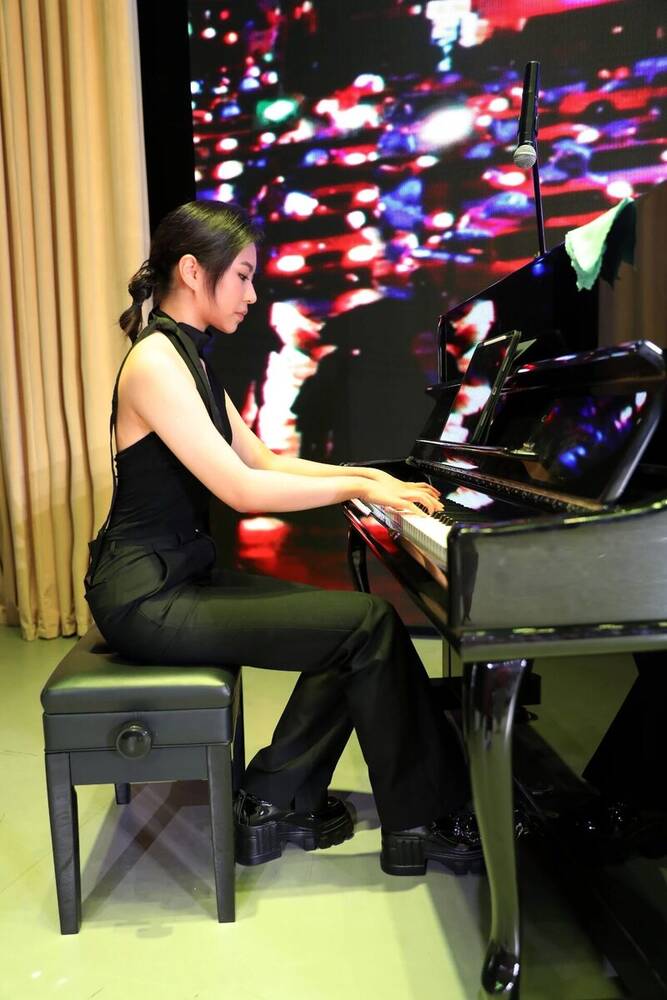
Yang Huilin, as Rita, had the most emotional gear changes in the show and the least time to make them. “I have never enjoyed a rehearsal process this much,” she said. “Everyone was easy to work with, which is not the same as everyone being good. It meant we could keep going after a bad run.” Tian Yuxuan, playing the nervy younger brother Vinnie, worked from the opposite direction: a character with none of his own confidence, permanently instructed by other people.
Zhao Zerui played five parts — singer, waiter, passenger, hat seller and, in his own summary, “whatever else needed a body”. The quick changes were brutal. “My main feeling at the end was: I am so tired,” he said. “But I want to be remembered as the Monte Carlo singer. I gave that one everything.” His explanation for why the cast did not freeze on stage is the least sentimental and most convincing in the whole production: they had all been entering singing competitions for years. “Some people sing to relax. I sing because every note is a way of telling the people around me something. The fuller the hall, the better I am.”
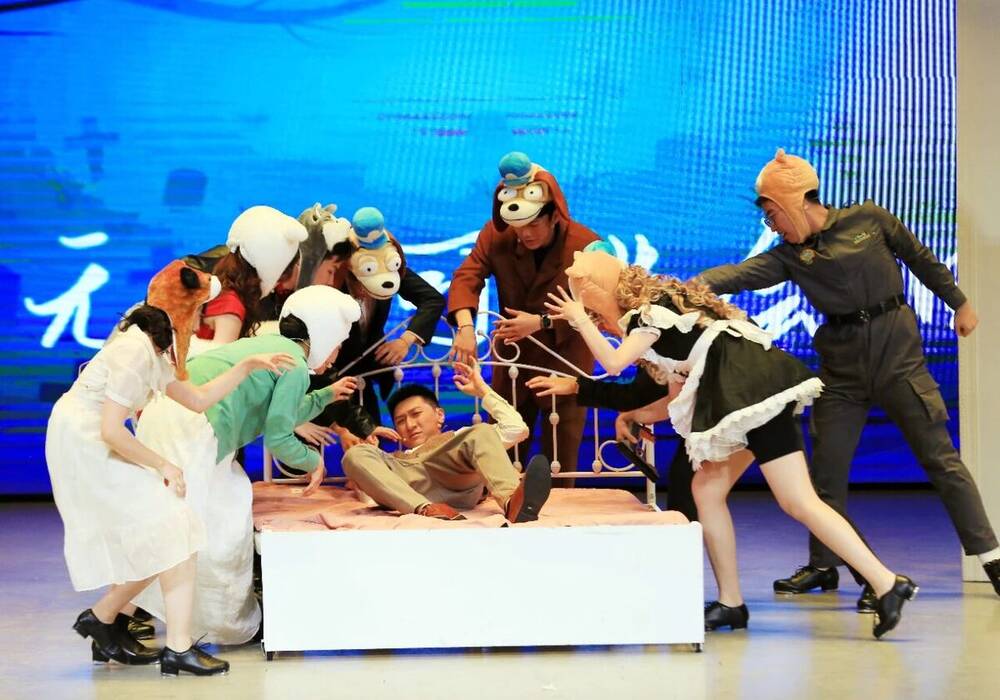
Lu Qihang, co-director, was blunt about the standard he was judging against. “They are not behind students who have studied acting professionally,” he said. “They made mistakes. The charm of live theatre is that there is no cut and no second take — the only skill on display is how you cover the mistake.” Rehearsal, he said, was mostly a matter of attrition and adjustment — a group of people learning how to be in the same room at the same tempo.
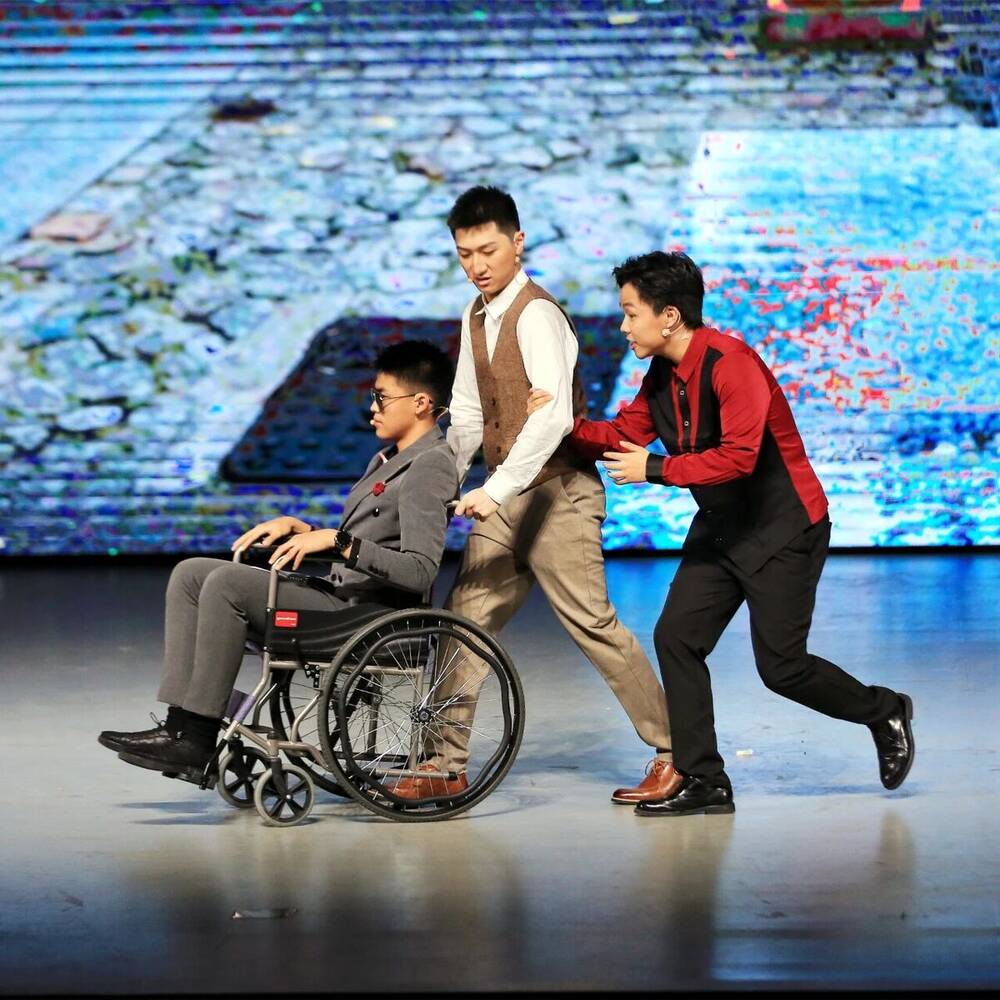
Fu Rao, who has now directed several of these graduation productions, used her programme note to argue with the word in the title. “We are rarely satisfied with our own happiness,” she wrote. “We always think it would be better if. What the students showed, over their final year, is that happiness is plainer than that: being healthy, being safe, noticing that people are kind to you, forgiving someone, and letting yourself be forgiven.”
The show ends with Harry richer than he expected and less certain about what luck is. The class left the stage the same week they left school. In the photographs taken afterwards, half of them are still in costume and none of them are looking at the camera.