Before the Curtain: Three Plays That Taught a Class How to Leave

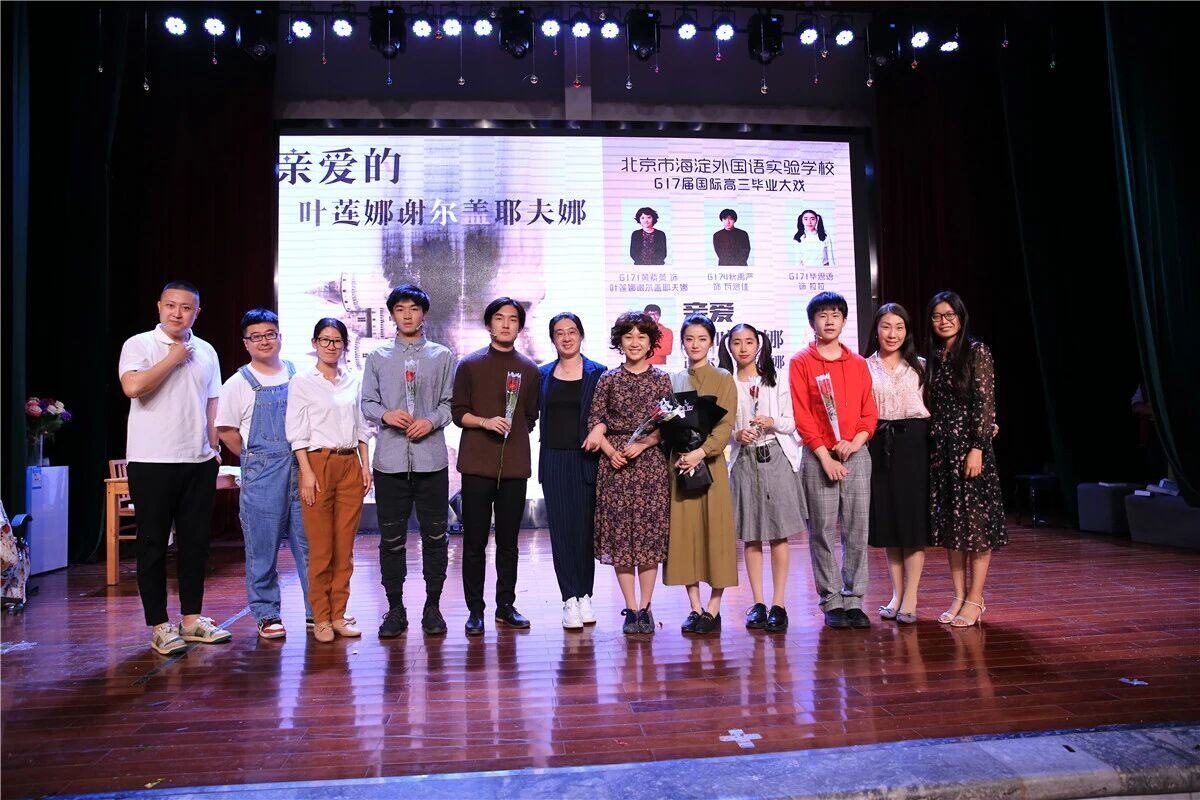
The spring of 2020 gave the graduating class a choice: cancel the plays, or rehearse them in whatever time was left. The school reopened late, the calendar had been flattened, and the usual run of a graduation production — a term of rehearsals, a settled venue, a full house — was gone. The students took the second option and compressed a term into a month, weekends included.
What they put on, between 26 and 28 May, was not one play but three: Blind Mountain and 2021, staged together by the IB class as a double bill, and Dear Yelena Sergeyevna, performed by eight students split into two alternating casts. Three productions, three registers, five days. Almost none of the cast had been on a stage before.
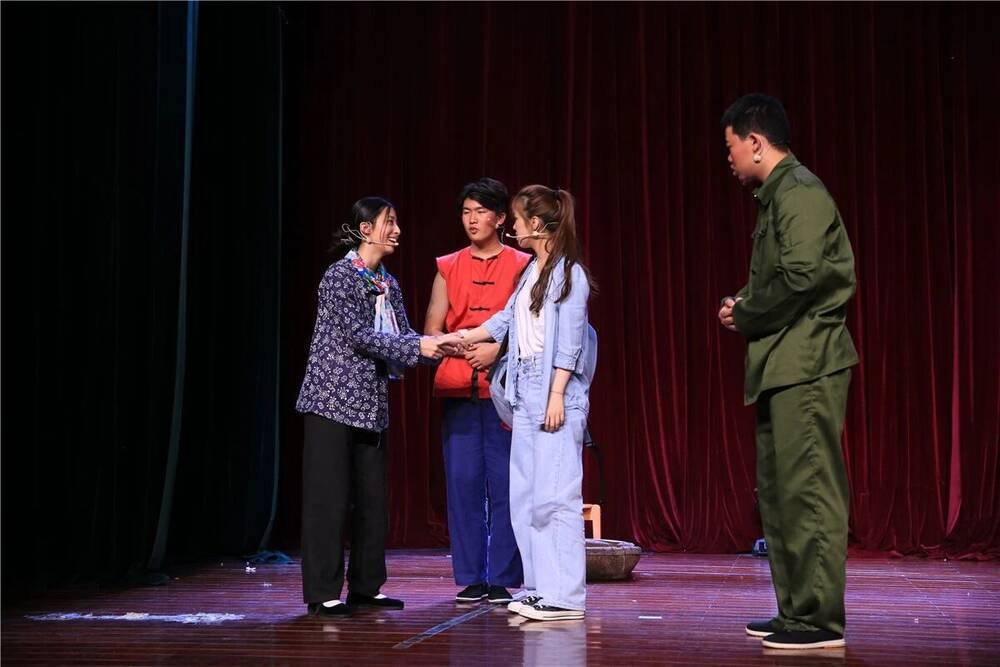
Blind Mountain was the hardest. Adapted from Li Yang’s film, it follows Bai Xuemei, a university student sold to a mountain village as the wife of a farmer, and the years it takes before she is found. The material is a case study in everything a school usually keeps off a stage: trafficking, domestic violence, local officials protecting each other, neighbours who look away.
“Young people should not avoid the dark parts of their own society,” said the director, Liu Xing. “These things look far away, and they happen around us.” Sun Jialu, who played Bai Xuemei, described the production as her first time on the other side of the footlights, and the first time she understood how many departments have to work for one scene to land: lights, props, sound, cues. Shi Pengyu, playing the farmer who buys her, said the cast spent most of the rehearsal period on the villagers rather than the leads — the illiteracy, the deference, the casual cruelty — because the play fails if they are played as monsters.
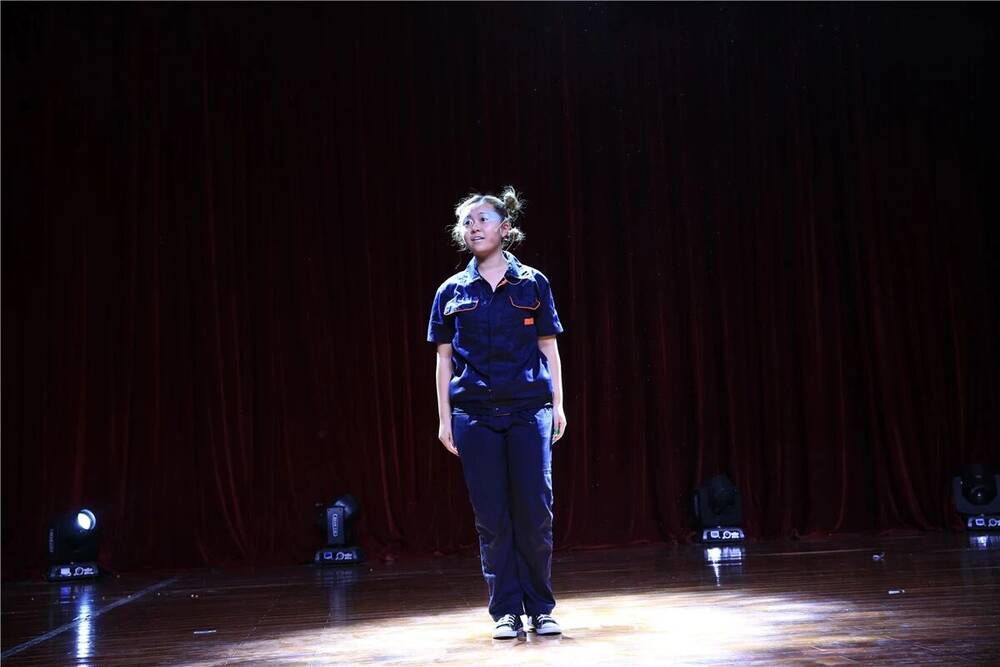
2021 was the opposite instrument. An avant-garde piece set in a laboratory, it stages a test: an artificial human is asked to give up food, sleep, art and sympathy in the name of efficiency, and begins to ask what she is being optimised for. Four students played the scientists, in white coats and dark visors, circling her with clipboards.

“We spent a year being hurried,” said the director, Song Yuxuan. “We hurried ourselves. And then we discovered that when we finally had time to arrange, it had already gone. The play is about not losing the ability to enjoy your life while you are busy being efficient.” Zhang Xinyue, one of the four scientists, put the point more simply: the production was the first thing her class had made together that had nothing to do with an exam, and it arrived in a year that had not been kind to anyone.
The third production was the one that unsettled the cast most. Dear Yelena Sergeyevna, by the Soviet playwright Lyudmila Razumovskaya, is a single-set play: graduating students arrive at their teacher’s flat with a birthday cake, and then with a demand. They want the key to the safe and the examination papers. What follows is a slow, precise negotiation in which the students use every affection the teacher has for them as leverage.
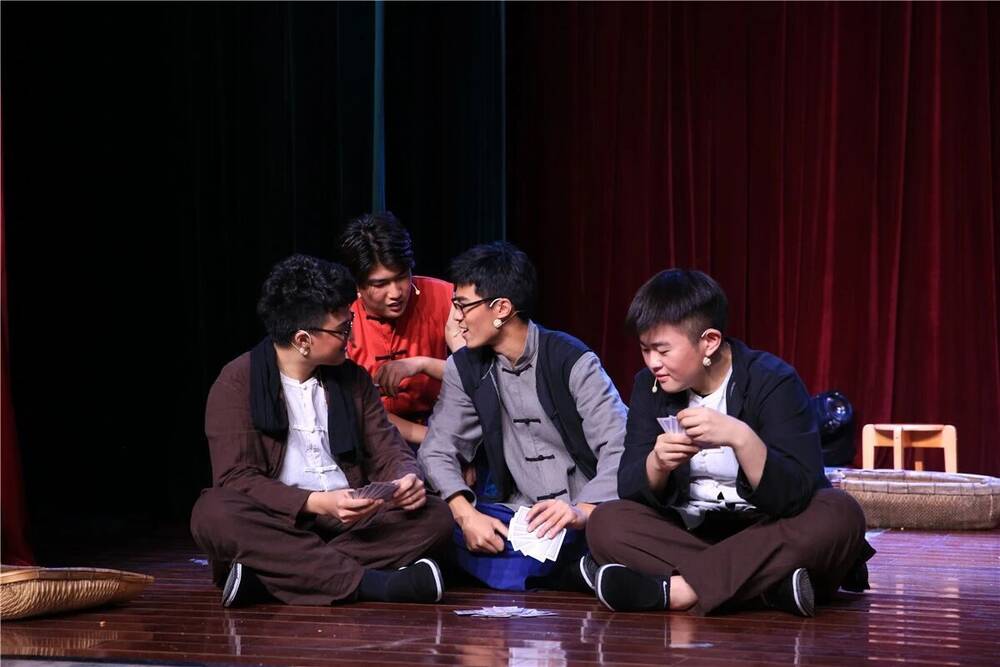
Zhang Hui, the drama teacher who directed it, remembered a conversation from the middle of rehearsals. The boy playing Volodya told her he did not like his character at all. “He is horrible,” he said. She was worried he would not commit to the part, and relieved that his instincts were intact. She told him to play the character honestly rather than sympathetically, so that the audience would recognise him instead of liking him.
Di Yuyan, who took the role, described the difficulty as mechanical before it was moral: a dense script, learned late, with the fear of being stopped mid-scene. Huang Ziling, playing the teacher, said the two casts made each other better, because on the nights they were not performing they sat in the audience and watched their own scenes go past. “The whole thing was difficult and I enjoyed almost every minute of it,” she said.
The plays were staged in a school that had spent the spring learning how quickly plans can be withdrawn. That is probably why the programme note reads less like a celebration than a set of instructions. “Performance is a language,” Zhang Hui wrote. “May it light your life.” Most of the cast will not act again. A few will. Either way they now know what it costs to hold an audience for a full evening, and what it feels like when the lights come up and the room is still there.