Horse Treats with a Purpose: Hannah Liu’s Equine Welfare Project

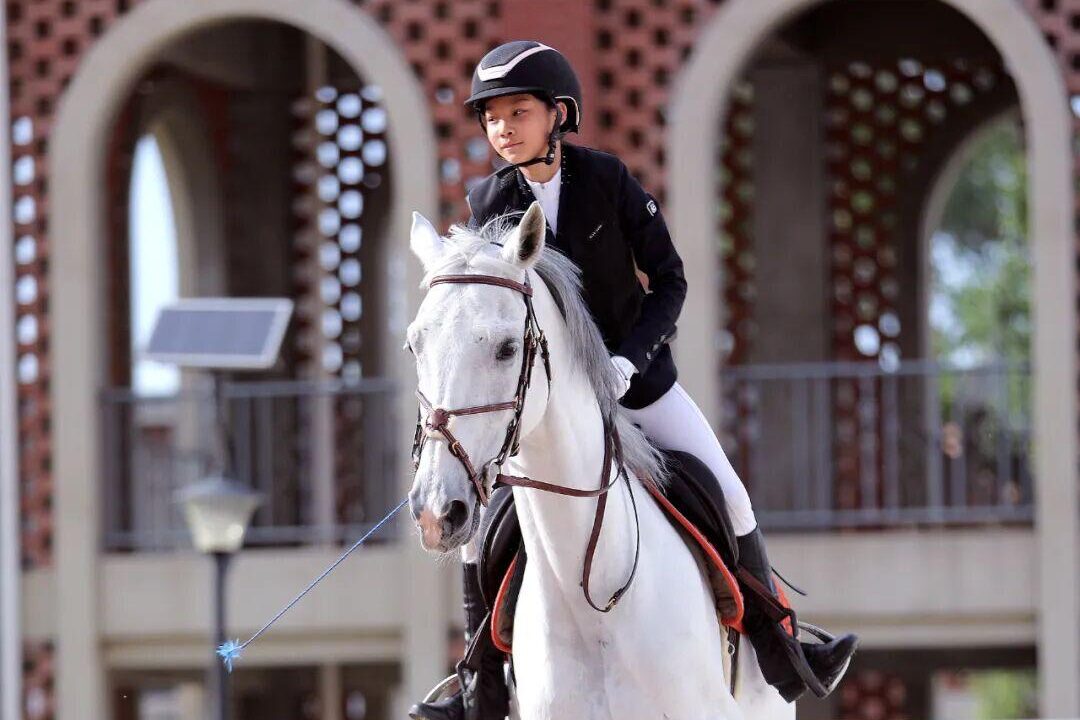
Hannah Liu had spent years riding and helping to run the daily routine of a stable, and the horses taught her to look at the barn from the inside. Some of them spent most of the day in their stalls. Room to move was fixed, chances to forage were limited, and more than one horse answered the constraint with the same small vocabulary: bar-biting, door-kicking, walking the same few metres of bedding.
The usual answer is to change the feed. Liu took a different route. She wanted enrichment a working yard could actually adopt — cheap, easy to build, and safe to leave with a horse that has nothing else to do. That decision split into two halves: a line of baked treats designed as foraging work rather than as a reward, and a pest-management system built out of the barn’s own food waste.
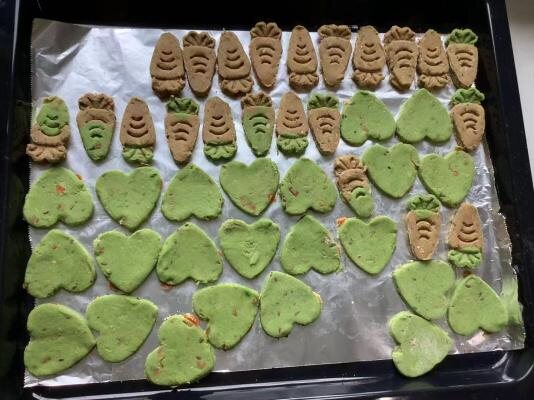
The biscuits started with reading rather than baking. Liu worked through the literature on equine digestive anatomy, nutrient requirements and feed formulation, then designed and compared twelve formulations. Each one went through nutritional analysis and palatability testing with the horses themselves; ingredient ratios were adjusted and the batch re-baked until a handful of recipes held up on both counts. The cooling trays in her records are the trace of that loop: heart- and carrot-shaped biscuits in two colours, sorted and counted.
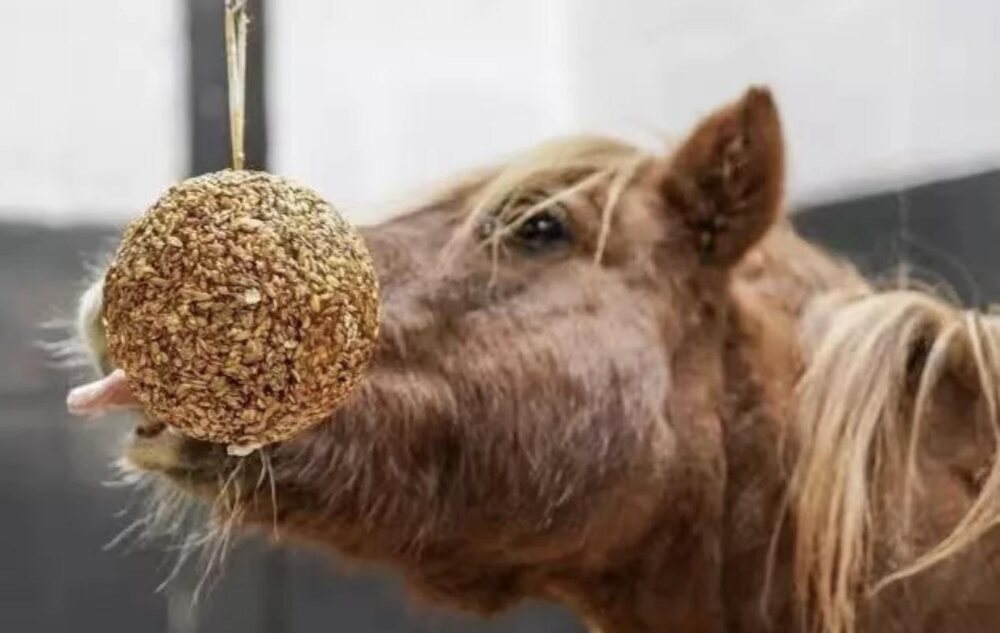
The product she cares most about, though, is the lick stone. A conventional treat disappears in seconds. A lick stone hung on a stall door lasts for minutes, and that difference is the whole idea. “I tried to design the lick stones as an enrichment tool rather than a snack,” Liu says. “Licking and investigating gives a horse something to do between meals: extra sensory input, and a choice about when to engage.” Suspended on a rope at head height, the block can be worked at, abandoned and returned to — which is exactly what a stabled horse cannot otherwise do with its day.
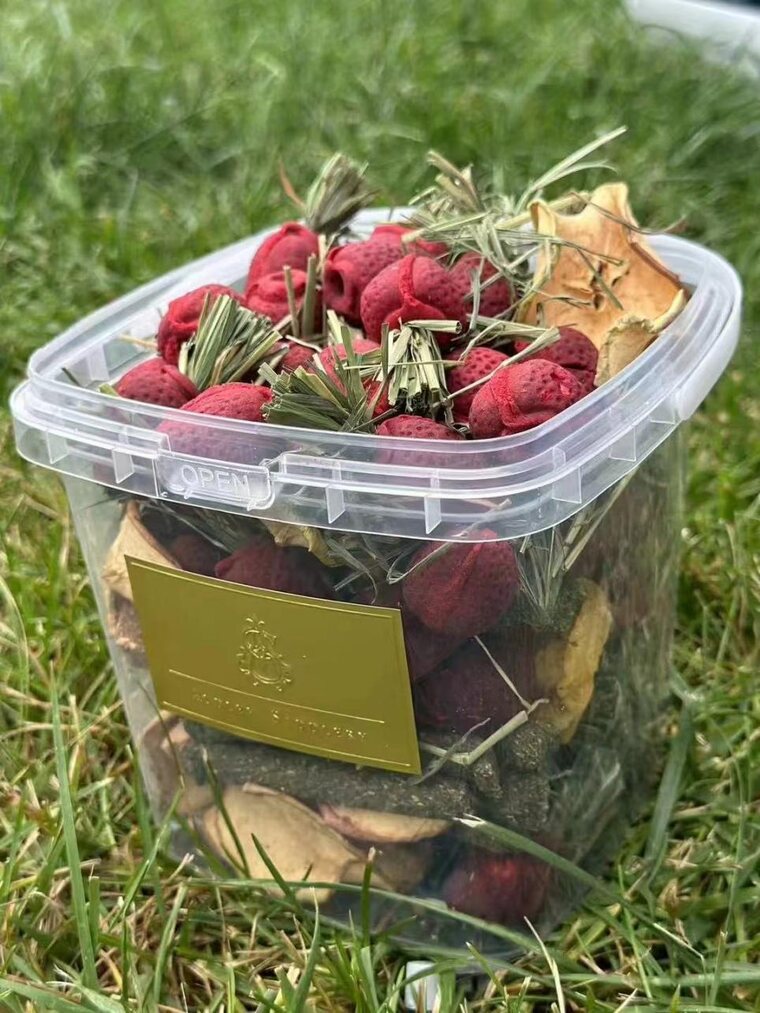
Her interest in ingredients runs past flavour. She screened naturally occurring materials associated with joint health, insect deterrence and stress relief, asking whether they could carry a functional role inside a horse treat instead of only improving palatability. That strand of the work stayed exploratory — a list of candidate materials and a method for testing them — but it is where the project is heading next.
The second half of the project came from the flies. Biting flies are a welfare problem in every yard: horses stamp, swat, bunch together and stop grazing. Chemical control costs money and needs handling discipline. Liu used food waste and by-products — onion skin, hops and spent coffee grounds — as candidate repellents, running them as controlled comparisons against biting flies. She then designed and iterated a physical trap around the same logic, pairing a waste-derived attractant with a housing a stable hand can service in under a minute.
The traps went out to three working yards — two in Beijing, one in Tianjin. Across spring and summer the three sites caught more than 300 biting flies a week between them, a large share of them stable flies. Her catch records are laid out as counted plates, labelled and compared rather than estimated.
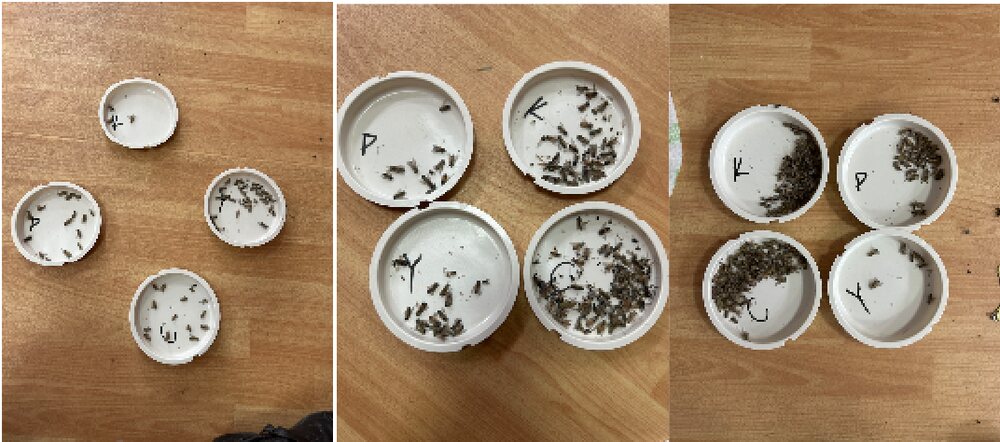
She is careful about what those numbers mean. A trap does not solve a fly problem; it lowers pressure, and at this price it does so in a way a small yard can sustain. The larger claim is about material: what a kitchen discards can be redirected into pest management, and a yard gets a cheaper, lower-impact option in the process.
The biscuits and lick stones were also sold in small volumes, online and at the yards. All of the proceeds went to equine-assisted programmes for autistic children, where Liu recruited and coordinated more than twenty volunteers.
What holds the parts together is a habit of looking at a working system and asking where a small, cheap intervention would pay off. Welfare in a barn is rarely improved by one large change. It is improved by a horse having something to do at eleven in the morning — and by one fewer fly on its flank.