Closing the Loop: Mandy Xu’s Composting, Wetland and Rainfall Trials

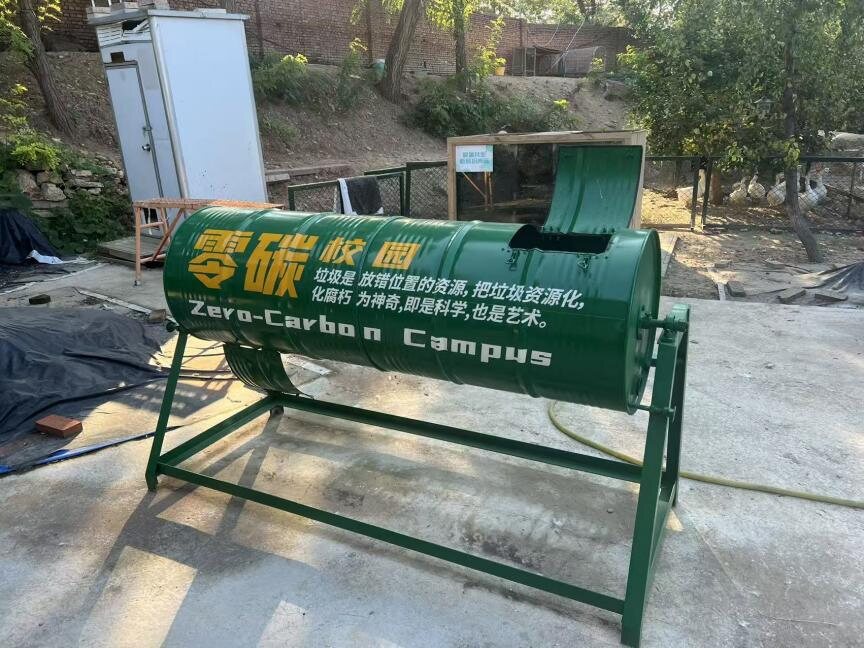
Mandy Xu begins with a bucket of canteen waste. In the school’s Zero Carbon Program she and her classmates built a composite composting system, running aerobic bacterial composting and vermicomposting side by side instead of choosing between them. A rotary drum keeps turning the organic load, maintaining the oxygen supply that microbial decomposition depends on; worm bins provide a stable, dark environment in which kitchen scraps become castings. Between the two, she spent a term learning what compost actually demands — the balance of moisture, temperature and air — and watching waste turn into something that smells of soil.
The bokashi trial came next, with the biology club. Kitchen waste went into sealed fermentation barrels and was inoculated with EM (effective microorganisms) to start anaerobic fermentation. The signal that the process had taken hold was visual: a white mycelial mat spreading across the surface of the waste. Handling the barrels herself taught her how differently the anaerobic pathway behaves from the aerobic drums next door, and how much of a resource problem is really a microbiology problem.
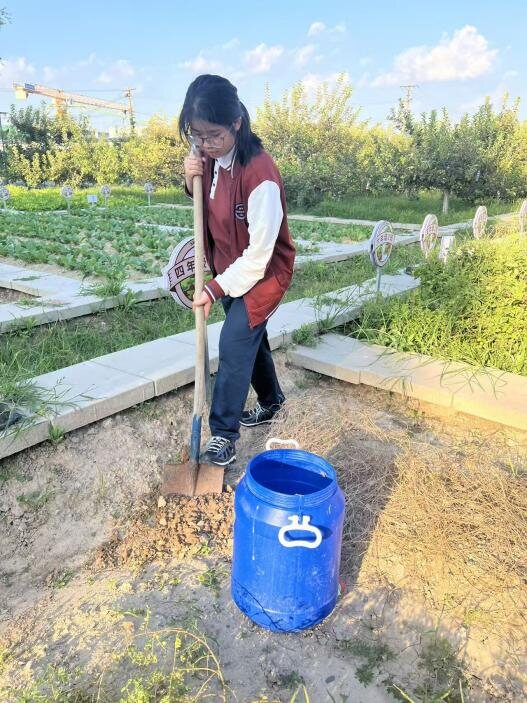
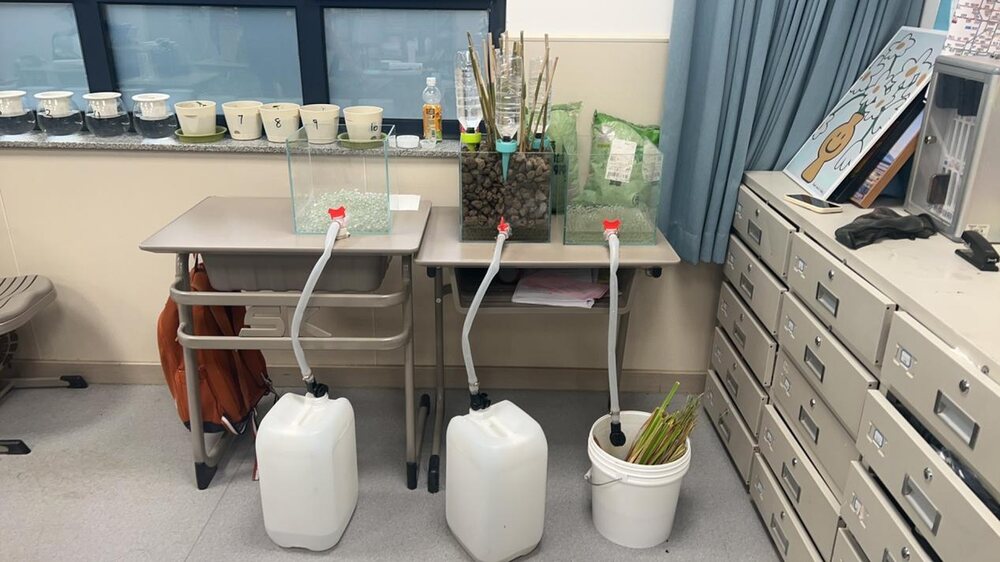
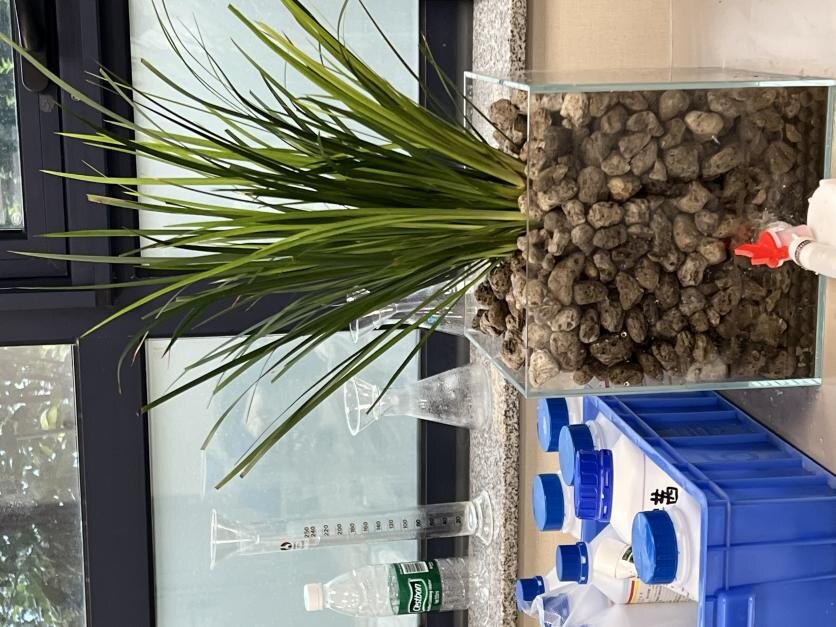
Her PBL project moved from solid waste to water. She built three vertical flow constructed wetland models, planted each with a different aquatic species, and sampled inflow and outflow to measure nitrogen. The build was entirely hers — assembling the columns, packing the substrate layers, establishing the plants — and so was the routine that followed: draw samples on schedule, run the nitrogen tests, log the readings, compare the three columns against one another. The three columns did not perform alike. Different species remove nitrogen at different rates, and the gap is measurable only if the sampling is disciplined — which is the part most student wetland builds skip.
The mechanism behind the numbers is what she wanted to see for herself. A constructed wetland is not a filter; it is a partnership between plants, substrate and microbial communities, and the nitrogen leaves the water through all three at once. Building the system also taught her the grammar of experimental work — a control, a variable, a sampling interval, a result that can be defended.
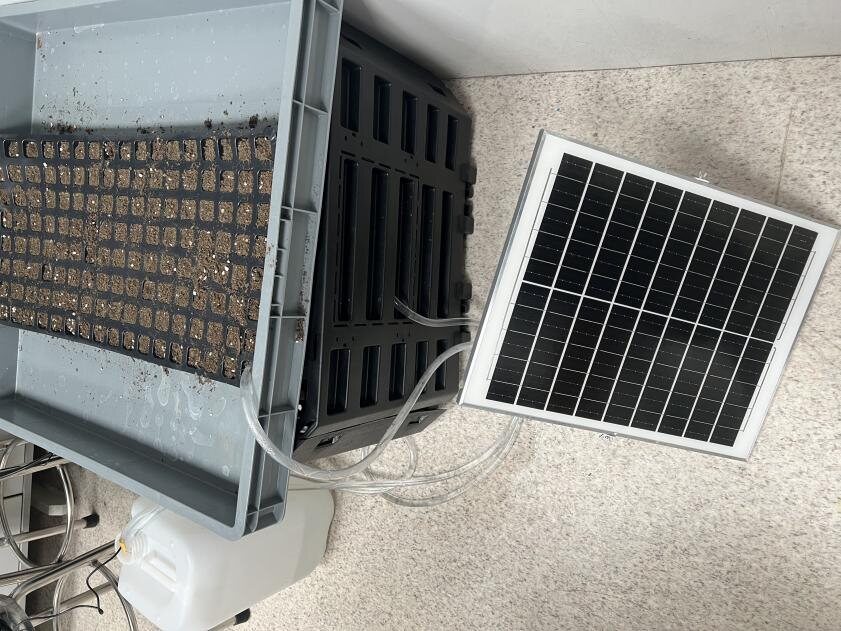
Two further builds pushed the same logic in different directions. Her compost-based soil heating system uses a water loop to carry residual heat out of an active compost pile and into the base of seedling trays, warming the growing medium instead of venting the heat to the air. The rig runs on its own solar panel, with no grid connection at all, which forced her to balance three things at once: circulation rate, insulation, and the stability of the power supply. Recovering heat from waste and running the recovery on renewable power is a small system, but it is a complete one.
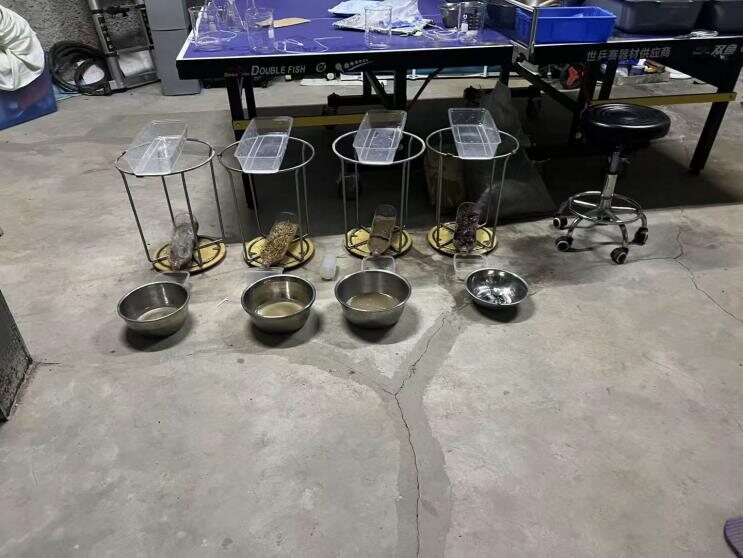
Her last experiment was about rain. She built four rainfall simulators, each with a different surface cover, and collected the runoff the simulated storms produced. After each run she kept measuring — how much water evaporated, how quickly, from which surface — to see how cover material changes both the volume and the fate of runoff. Four rigs, four covers, repeated until the pattern held.
Read together, the projects are one argument. A closed loop is not a slogan; it is a set of subsystems that each have to be calibrated — a drum that must keep turning, a barrel that must stay sealed, a column that must be sampled on time, a pump that must not outrun its panel. Xu came out of the programme with the habit that matters most for sustainability work: measure the loop before you claim it.