From the Barn to the Scanner: Yuemin Sun’s Swine Living Laboratory

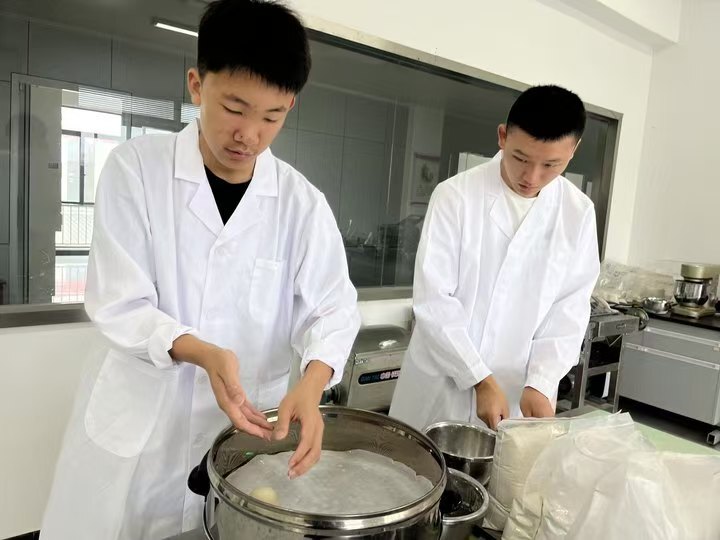
Yuemin Sun’s project began at his family’s dinner table. Gastrointestinal illness runs through his relatives, and rather than accept it as background, he started a record: ten family members, their daily diets and their symptoms, tracked over months. From those records he built individual plans — dietary fibre plus a probiotic regimen tailored to each person — and kept adjusting them as the data came back. He read his way into nutrition science to do it, and took on his grandfather’s rehabilitation training and daily meals as the most closely watched case in the set.
The change in his grandfather was visible enough that the family noticed without being told what to look for. What Sun took from it was less a recipe than a rule he now repeats: there is no universally beneficial food, only food that fits a particular person. Nothing on the shelf is good for everyone; whether a food helps depends on whose body is receiving it.
Ten people is a small sample, and he treats it as one: a case series, not a population study. But the method behind it is portable — write down what was eaten, write down what followed, change one variable at a time, and keep the record long enough to see whether the change held. He would later apply the same discipline to animals, where the variables are easier to control and the stakes are just as concrete.
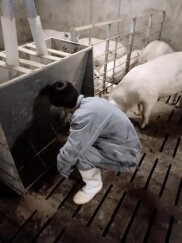
The second laboratory had a different smell. Sun spent a season working on a pig farm, and the job description was simple: feed the animals, clean, observe. He observed more than he was asked to. He watched when the pigs ate, how long they rested, how they moved, and began recording how differences in appetite showed up later as differences in weight gain. Somewhere in that routine he stopped being a carer and became a researcher, and the question he carried away was not about his own shift work but about the animals: is there a more rigorous way to raise pigs that are healthier and produce better meat?
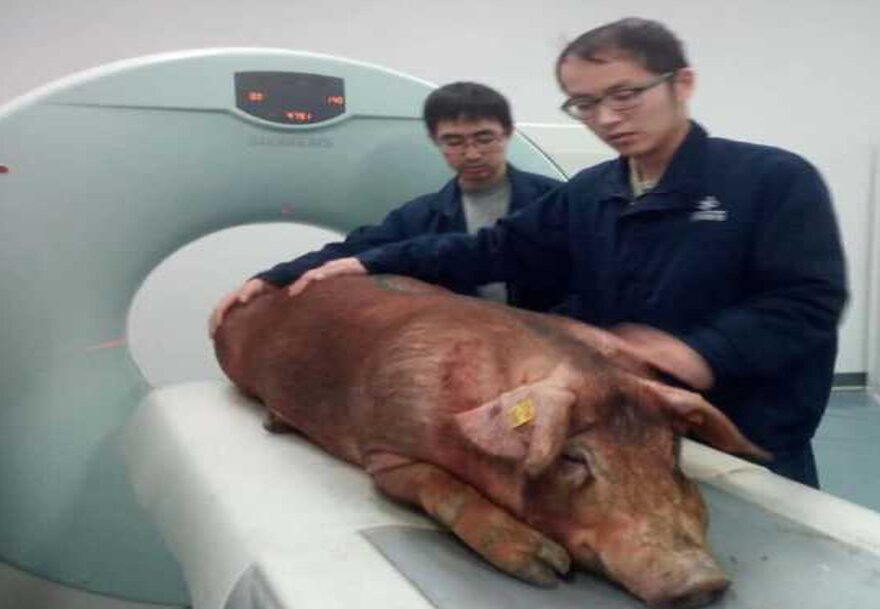
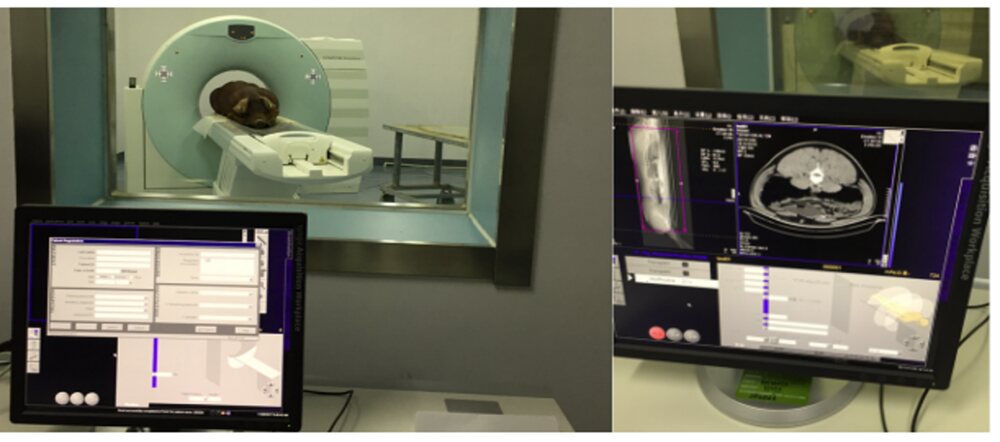
To answer it he needed instruments the farm did not have. At a research institute he learned to handle CT scanning of live pigs — positioning an animal on the table, running the scan, and reading the difference between what a farmhand can see from outside the pen and what the images show inside the carcass. Body composition, fat distribution, muscle development: measurements that let a question about meat quality be asked in numbers rather than adjectives.
The through-line is a distrust of received rules. A family illness treated as fate, a pig farm treated as a place where nothing is worth measuring, a “healthy food” list treated as universal — each of those is a standard answer that stops people from looking. Sun’s method is the opposite: record first, then generalise. He will continue that work at Cornell University’s College of Agriculture and Life Sciences (CALS) from fall 2026, where the same combination — animal science on one side, human nutrition on the other — is exactly what the college is built for.
What he wants to carry forward is a habit rather than a subject. Keep asking why the rule exists, keep the notebook, and let evidence, not assumption, decide what is true.