Every Door Left Slightly Open: Wu Xiaowei on Trying More and Fearing Less


Strangers who meet the name before the person tend to assume a boy. Then they meet her — composed, warm, and quicker to laugh at the confusion than to correct it.
Wu Xiaowei transferred into the primary school and stayed seven years. In that time she appeared in almost every kind of room the school has — the rehearsal hall, the sports field, the club fair, the student council — and kept her marks near the top of the year while doing it. This spring she holds offers from Georgetown University, Carleton College and UCL. Georgetown admits very few undergraduates from mainland China in any given year, which makes the letter a little more than a formality.
She will go to Carleton, a liberal arts college in Minnesota where the classes are small and the teaching is the point.
Seven years is a long time in one place. What did you do with it?
Almost everything that was on offer. Performances, sports meets, clubs, the student council. My calendar was full in a way that would have looked absurd from outside. The grades stayed where they needed to be, but the interesting part of school was always the second thing I had said yes to.
What do you remember most clearly?
Two things, both group efforts. In primary school there was a showcase we built together over weeks, and in middle school a volunteer teaching trip. What I remember is not the performance but the working: a dozen people arguing about the same small problem until it was solved.
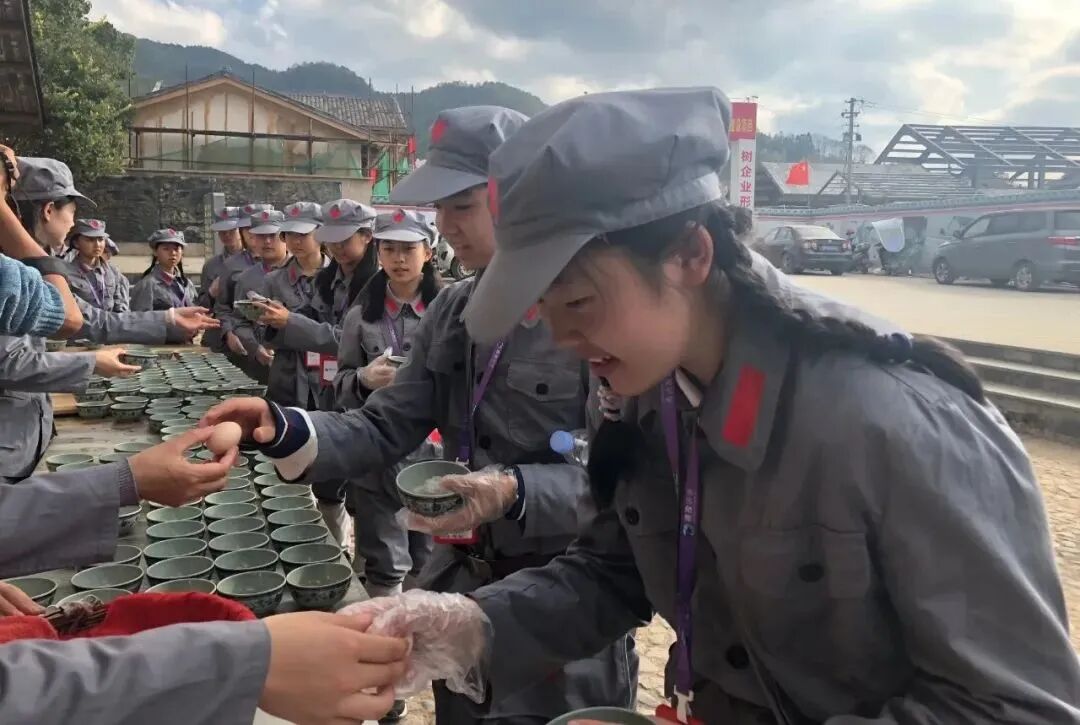
A class you would not have taken anywhere else?
Pickleball. It did not exist in my life before this school, and now I cannot explain why more people do not play it. I also learned to ride here, which matters more than it sounds: a horse does not care how confident you claim to be. It taught me that fear is workable — you do the next small thing and the fear gets smaller.
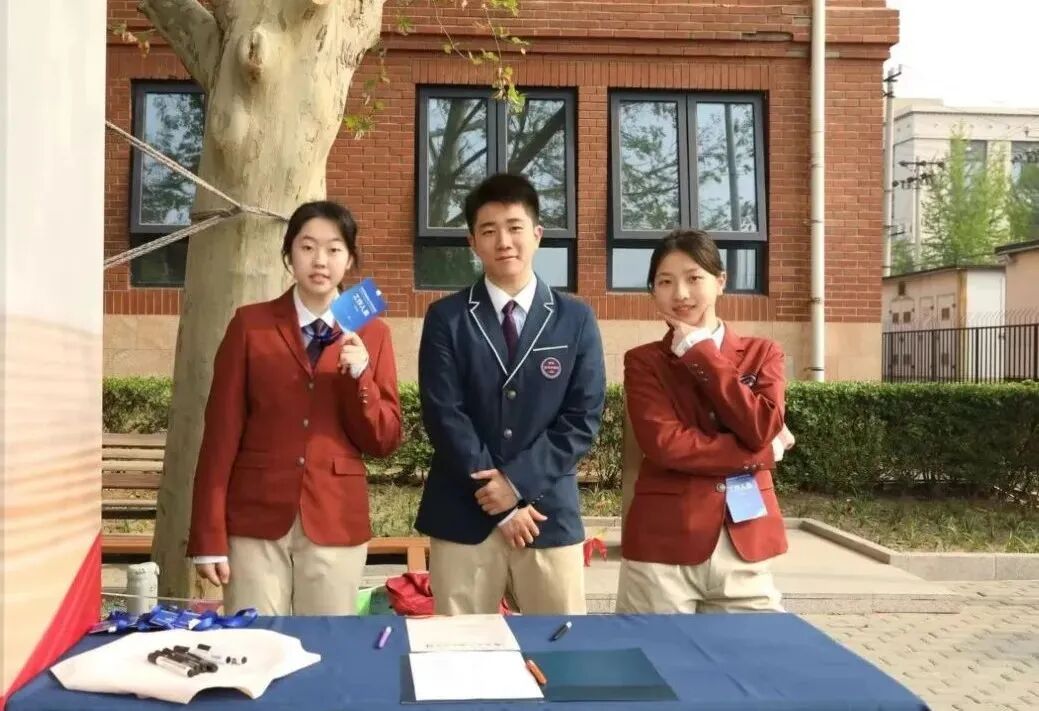
What did you apply for, and how did you build towards it?
Sociology and economics. I took AP Microeconomics, AP Macroeconomics, AP Calculus BC and AP Psychology, which between them cover the two halves of the question I am interested in: how systems distribute things, and why people behave the way they do inside those systems. The AP catalogue here is wide enough that this was a choice rather than a compromise — a wide menu is not decoration. It lets you find out where you actually stand.
What did the PBL projects and the student council give you?
The PBL work taught me to run a research question to the end, including the boring middle where nothing is interesting. The council taught me the opposite skill: how to get twelve people to agree on something by Thursday. I was president in my final year, and the job was mostly listening to people who had a better idea than mine and making sure it happened.
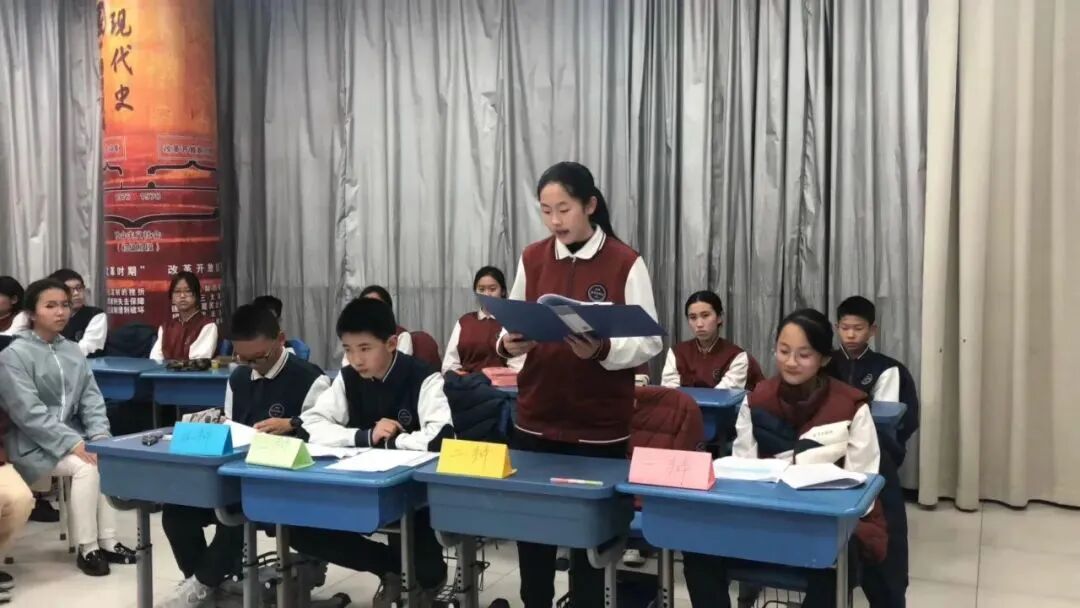
You were deferred more than once. How did you handle it?
Badly for about a day, and then not at all. My early decision was deferred, and a few early action schools followed. I gave myself an evening to be disappointed, and then went back to the applications that were still open with the same energy as before. It helped that I had never treated one school as the only possible life.
And the Cambridge interview?
The best conversation of the whole process. It began with my subject and moved into current affairs, and it was clear within five minutes that they were testing how I think rather than what I had memorised. Every answer became the next question — they kept pushing into the part I had not prepared.
Was there a harder year than the application season?
Middle school. My marks were ordinary, and I spent a lot of energy worrying about a future I could not see. What changed was slower and less dramatic than advice makes it sound: a different environment, a different set of people, and a decision to spend my attention on the next task instead of the next year.
What would you say to a younger student?
Explore widely while the cost of exploring is still low, because you cannot plan towards something you have not met yet. And do not spend your anxiety on things that have not happened. A good plan is mostly a way of making uncertainty smaller.
How did you choose Carleton?
By asking what I would actually do with four years rather than which name would look best on a page. I wanted small classes, professors who know my name, and the freedom to keep both sociology and economics in view. The school that fits is the best school.
And on leaving?
The road here was not smooth, and I am glad it ran through this campus anyway. Every person and every ordinary afternoon did some of the shaping. Nobody here ever told me to pick one thing and stop.
Her record includes a place in the global top one per cent of AMC 12 with 11 of 15 on the AIME, a gold at the British Chemistry Olympiad, gold at the Business Pioneer Case Challenge and a bronze in the National Economics Challenge. Carleton, founded in 1866, has twice been ranked first in the United States for undergraduate teaching.