The Strength Called Unbeatable: Ma Liangyu, from the Sports Track to Cornell


There is a version of Ma Liangyu that exists only in family photographs: a round-faced boy at the edge of the group, arms held close, hoping not to be asked anything. He does not mind the pictures. The boy in them, he says, was not unhappy — only uncertain what he was for.
The turn came in the sixth grade, with a choice that looked purely practical. He joined the bilingual dual-excellence sports programme at the Jingbei campus, then the six-year international track: training before the first lesson, a specialist coaching session in the afternoon, six days a week. Inside a year the extra weight was gone. Something less visible arrived with the fitness.
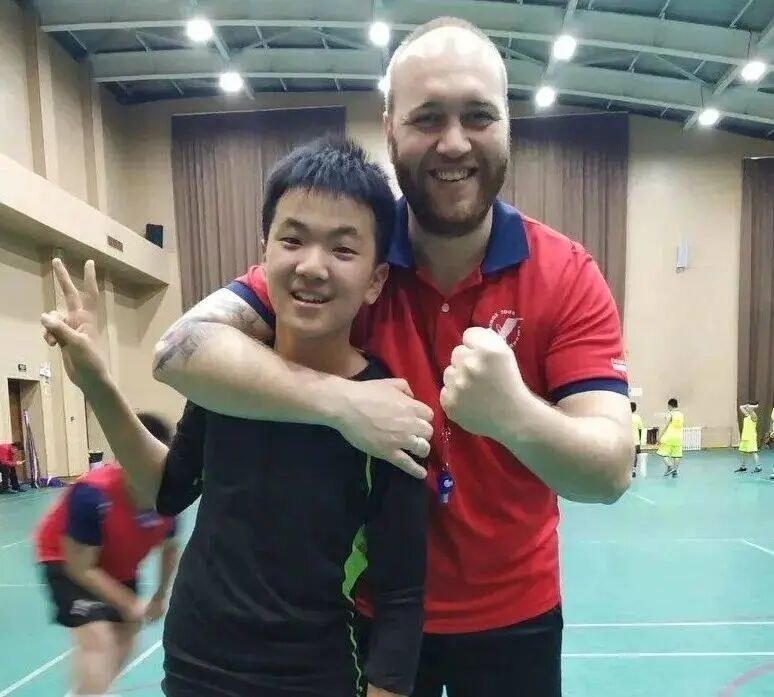
“On a court you cannot hide,” he says. “Somebody passes you the ball and you have to do something with it.” That is trainable, and the training leaked — into teammates, then teachers, then rooms. His marks moved at the same time, which surprised everyone except his coaches.
Six years on, the timetable has produced a result: an Early Decision offer from Cornell University's College of Agriculture and Life Sciences, where he will study environment and sustainable development, focused on environmental economics. What he carries there is long — a global individual gold in the UK Senior Mathematical Challenge, the highest individual honour at Environthon, an AIME score of 9, a national top-thirty ranking as a debater. He mentions none of it unless asked.
The conversation below took place on campus before graduation and has been edited for length and clarity.
You describe the sports class as the thing that changed your life. What did it change first?
The body, obviously — I was a textbook little fat kid, shy, not keen on talking to people. Morning training and afternoon sessions took care of the weight without my noticing. The more useful change was that I stopped being afraid of being looked at. In a team you are expected to speak, to call for the ball, to admit you lost your man. You do it badly for a while, then normally.
Your grades rose at the same time. Coincidence?
Partly the energy, partly a teacher's trick. She taught me to write a to-do list every morning — everything, in order, on paper. I still do it. For a real procrastinator it works almost unfairly well; the list nags until the day is finished. Sport gave me the stamina and the timetable, the list gave me the order.
Debate arrived later. What did it add?
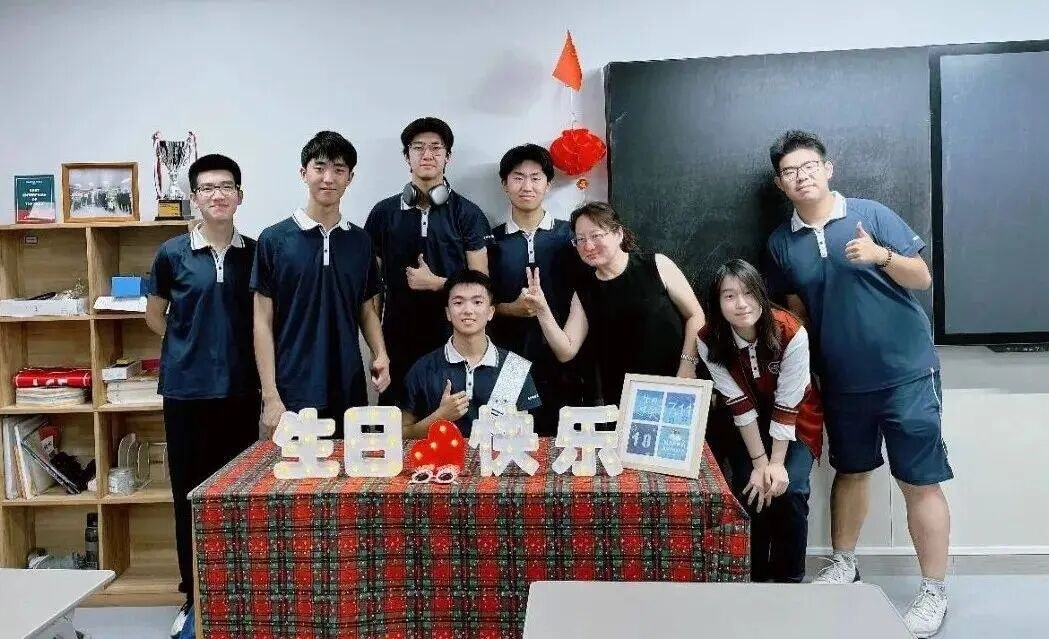
I joined in the ninth grade and was not good at it. Older students carried me through my first competitions; by the end my partner and I were running the club and pushing it down into the younger years. The obvious gain is critical thinking. The one that matters more is judgement: telling what is true from what is merely loud, then choosing your own position instead of inheriting one.

You also co-founded a research club on urban inequality — a strange partner to environmental economics.
Not strange: the same subject from another side. We combined environmental science with sociology and went to look at how people actually live in the city — interviews and surveys in the urban villages, including families who had refused to move for years. We wrote the findings up as a proposal, submitted it to the local government, and it was adopted.
What was hard about the application season?
The essays. Nothing I wrote seemed to contain enough of me, and the language never felt smooth enough for the occasion. I sent drafts to my college counsellor, to classmates, to a Cornell senior, and took whatever they gave me. Rewriting that many times is uncomfortable, but every round made me calmer, and calm is most of what you need in December.
What was the hardest stretch of growing up?
Primary school. I was shy, short of confidence, unsure where I was going and afraid of talking to people — it troubled me more than I let on. What changed it was the accumulation: tennis training in the sports class year after year, and the academic work slowly stacking up behind it. Then I forced myself into debate competitions, student council, groups outside school. Sport, study, social — three fronts at once. Confidence arrived as a by-product.

You interviewed for the United States and for Cambridge. Two different sports entirely.
InitialView was a conversation: what are you proudest of, how would other people describe you. Light, and honestly enjoyable. Cambridge was academic — the professor wanted my view on British property and the economy, then asked me to predict several countries' carbon curves. You cannot bluff that.
Why Cornell, and why this major?
The campus and the depth of the programme. Sustainability there is not one department; there are many sub-fields with practical work attached, which is what environmental economics needs. My advice to anyone choosing: do not pick by ranking. Visit, or read the website seriously, and ask whether the community described there is one you would want to join.
What would you tell the boy in those photographs?
Do not lose yourself trying to please people — do the thing you actually like, even badly, and keep something of your own inside it. And stay curious enough to keep asking questions, including the ones that take apart what you were just taught. You can only build your own tower once you have been willing to dismantle something.
Cornell was founded in 1865 above Cayuga Lake, and its College of Agriculture and Life Sciences has spent a century and a half arguing that the land is worth studying seriously. It will ask him for the mathematics, the economics, the fieldwork. What it will get first is the older habit: a list written before the day begins, and a boy who decided at eleven to be difficult to discourage.