Two Sisters, One Stable: Notes on Positive Pressure

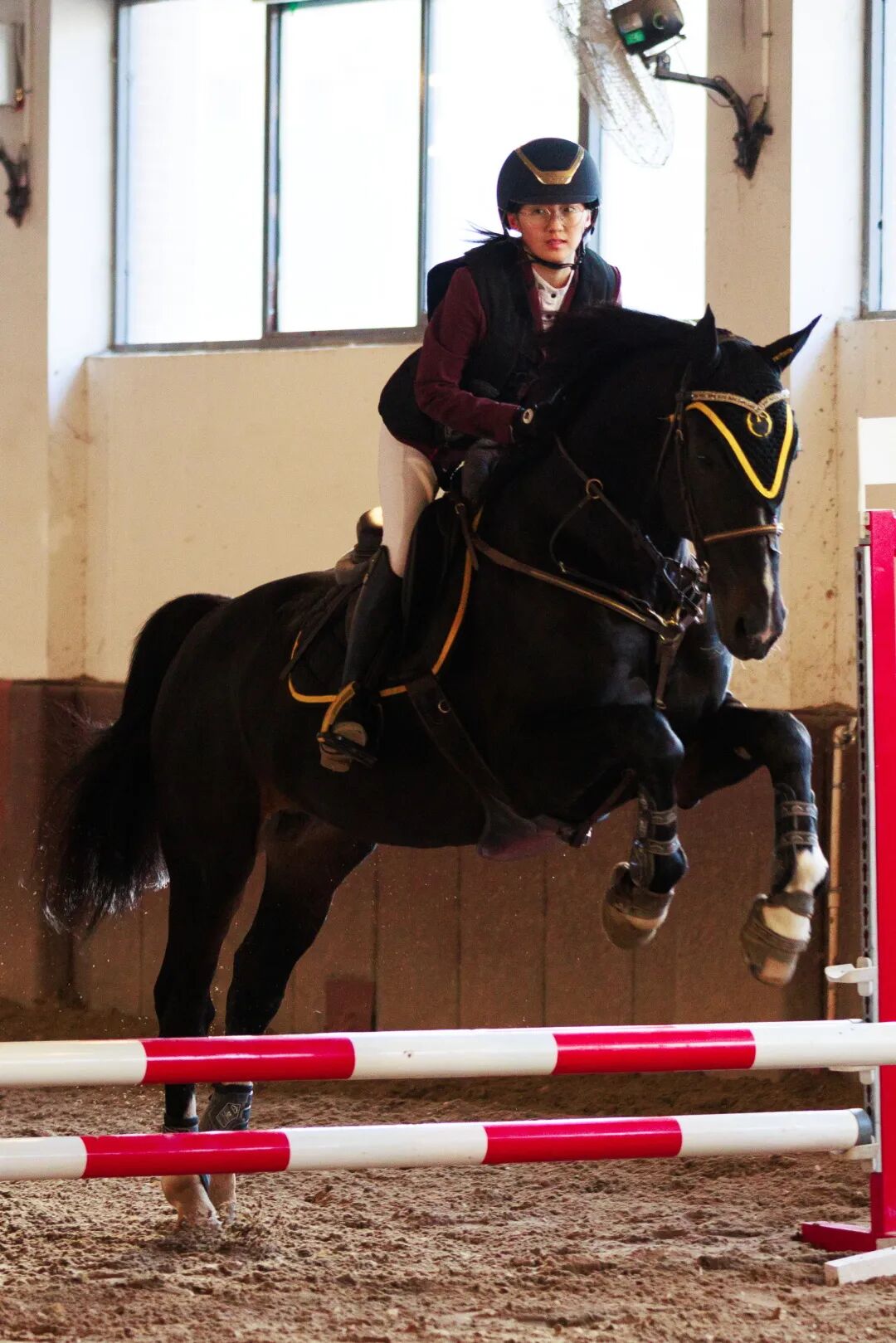
On a Saturday morning at the Jingbei campus the indoor arena is already busy at seven. Zhang Yuxin is on her second horse of the day. Her twin sister, Zhang Kexin, is working a line of three fences on the other rein. Their mother, who drove up with a bag of carrots, is at the rail.
“I buy them, wash them, cut them and bring them over so the girls can feed the horses themselves,” she said. “You cannot be casual about a horse. They get sick, they get hurt. If everything around them is right, the chance of an accident goes down.”
The carrots are a small illustration of a larger arrangement. In 2022 the school opened a bilingual equestrian class, the Tengfei programme, built on the idea that a niche sport taught properly is a serious education: the horse work, the theory, the English, the fitness, and the part nobody puts on a poster, which is turning up at seven in the morning in winter.
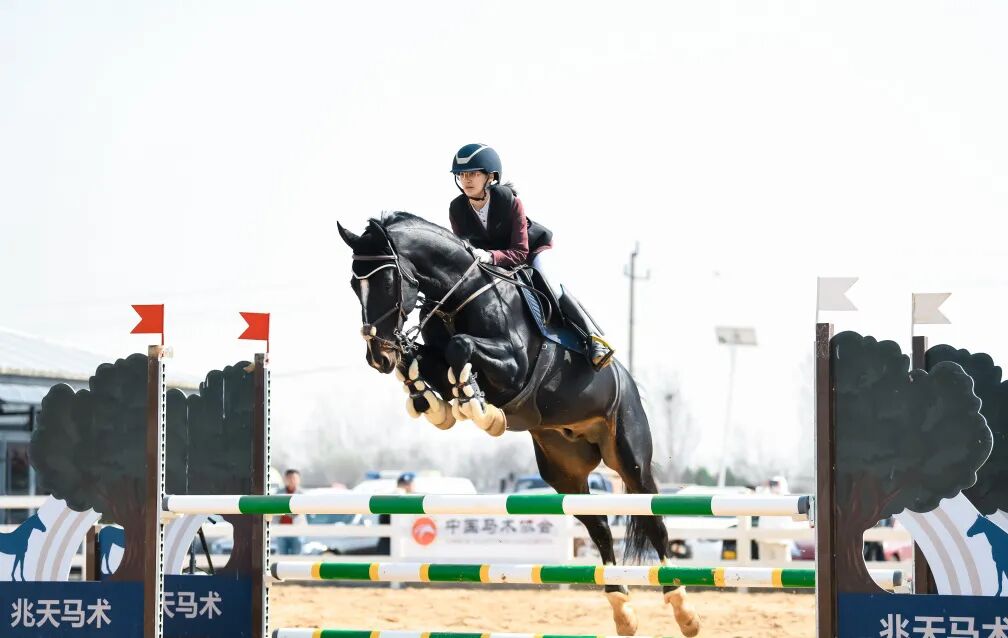
Yuxin joined in its first year. She had met her first horse on a family trip to Vancouver and had been asking for lessons ever since. By the end of her first year in the class she had a horse of her own, a black gelding called Dailong. She did not like him at first. He was big, and opinionated, and he did not care what a small rider thought of him. It took a season for her to see what he was: strong, willing, and generous with a rider who asked correctly.
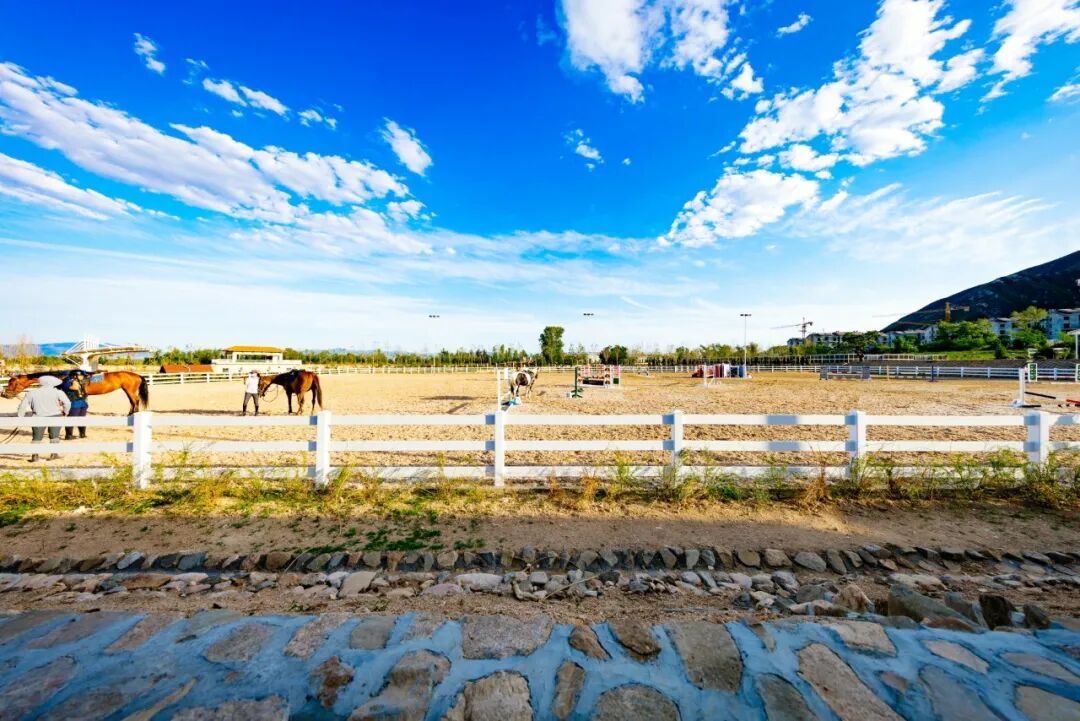
The school keeps more than fifty horses, teaching animals and competition horses, in stables beside two arenas. Students ride the school string as well as their own; Yuxin’s favourite is a retired thoroughbred that now jumps.
The timetable is where the programme becomes interesting. A day holds eight periods. Two are equestrian: one ridden session, plus one of equestrian English, theory, fitness or stable management. The academic periods those displace are made up in supervised study or evening prep. Nobody is excused anything; the day is reorganised.
“Riding takes time away from class, but it has not hurt my schoolwork,” Yuxin said. “If anything it taught me to work faster.”
Her class has turned that into a culture. Students race each other to change equipment, finish weekend homework on Friday so that Sunday can hold an extra lesson, and carry fourteen subjects in two languages while still starting at seven. The staff have a phrase for it, positive pressure, and it is hard to argue with the output: the class sits at the top of its year group, and its riders took a string of top-eight finishes at the Beijing youth championships.

Competition is where the education gets expensive. At the Hebei provincial showjumping championships, Yuxin jumped a clear round on Dailong and lost the result: the horse jumped an extra fence after the bell. She had been fourth. She came home flat, and told her coach she did not want to ride at the provincial games at all.
Wang Peng, her coach, did not argue with her. He entered her in another show, on a school horse called Salu Yinquie, and let her find out for herself that the clear round had not disappeared. She won the highest class at the provincial games on that horse, and with it national first-class athlete status.
“Before every competition I go to him with everything that could go wrong,” she said. “He walks the course with me, counts the strides, works out the angles for the turns, tells me where to put my leg. Even when I am so nervous I want to cry, once I am on, I try to think about nothing except the plan we made.”
Wang Peng runs the programme on monthly and weekly plans, with small classes and practice jump-offs, timed and optimum-time, so a competition feels familiar before it counts. He is, by turns, funny and strict. “Every student and every horse needs a different method,” he said. “One plan per rider.”
Lu Mohan, who heads the equestrian centre, went to school here herself before reading at Cambridge. She makes the admissions case for the sport without embarrassment. “Studying abroad taught me that the strongest universities look at the whole person,” she said. “I was a gymnast, and that earned me a national second-class athlete certificate, and it helped. A horse gives a student a story with real decisions in it. The animal gets ill, you help it back, and you learn something a textbook cannot give you.”
Her sister is part of the same story. Kexin rode at the provincial games too, and finished well without the same certificate. The two train together, compete against each other, and have developed the specific immunity of riders. “We fall off and get back on,” Kexin said. “It is not a big deal.”
Yuxin is past the stage where a bad round ruins a week. She has a horse she chose, a coach who plans her season, a sister on the same yard, and a mother with a bag of carrots. In a sport measured in strides, that is a fairly complete set.