Snow Day: Inside the School’s Ice and Snow Festival

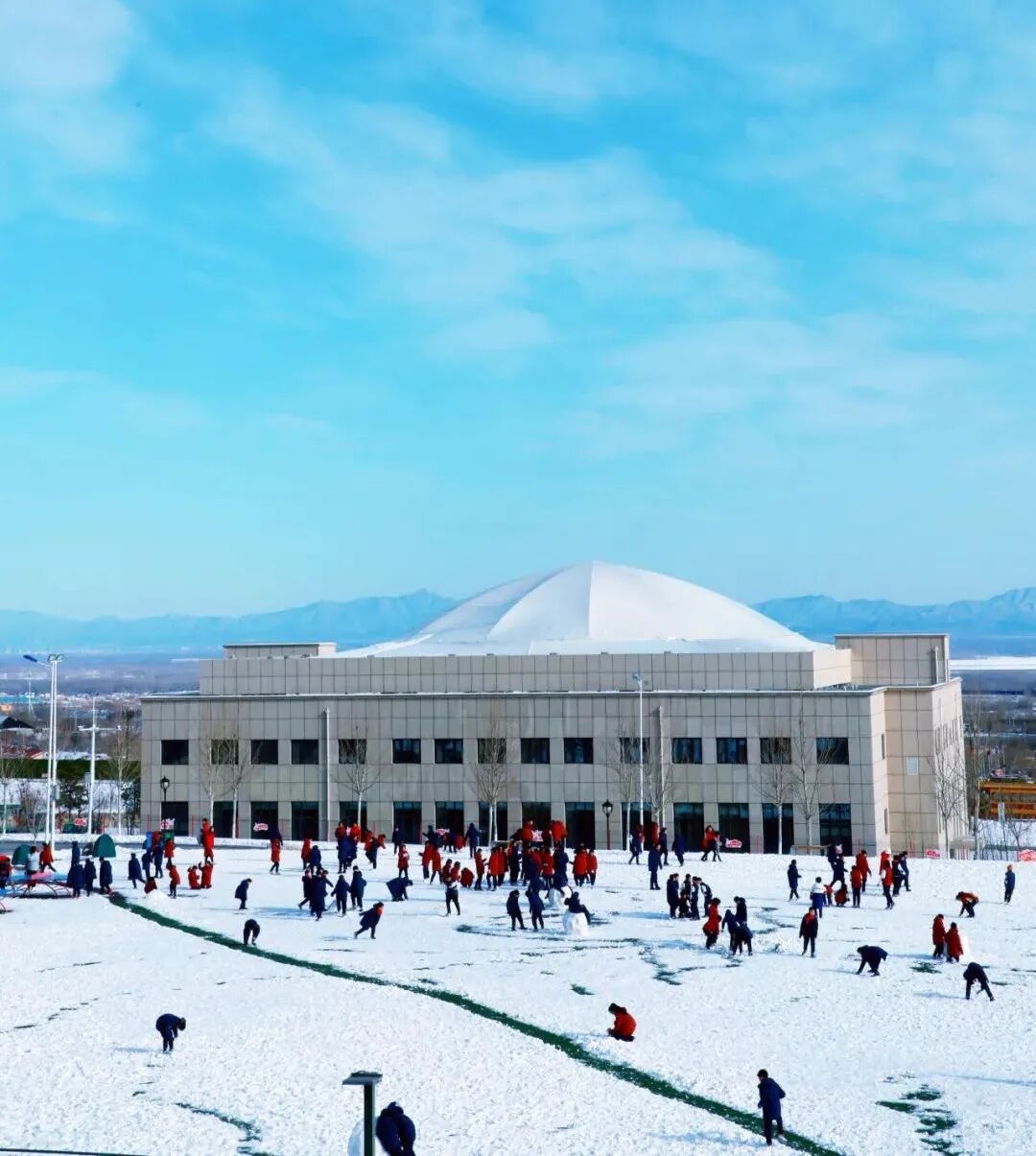
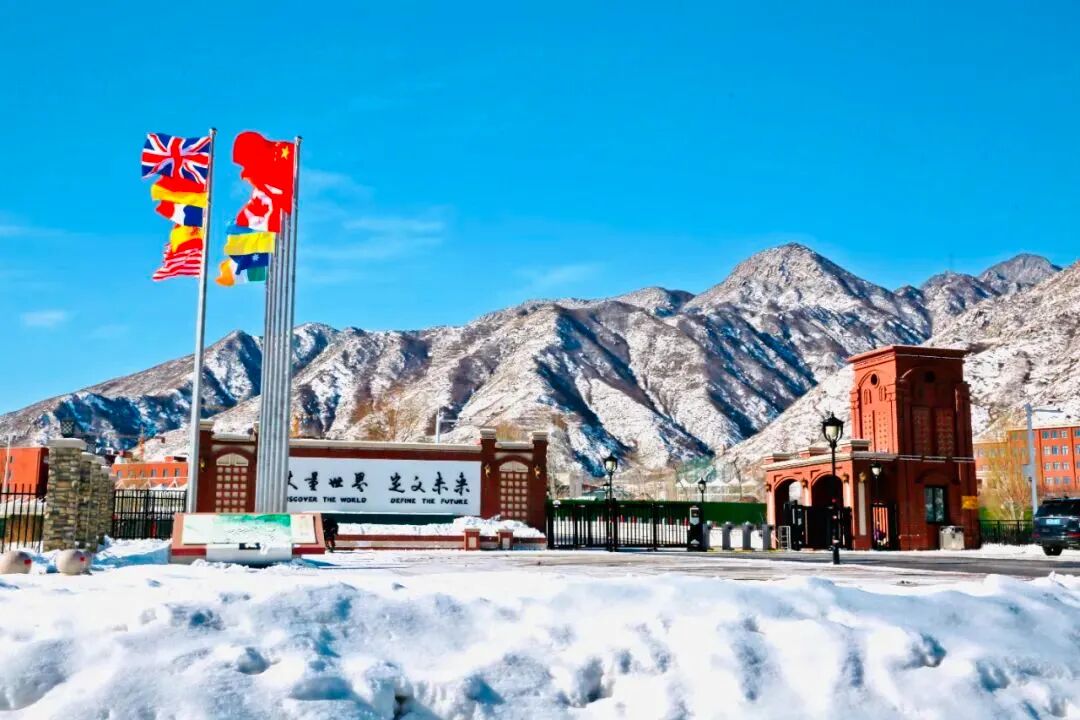
The ski run at the Jingbei campus is 310 metres long and 30 metres wide, and on the morning of the festival it was lined with people rather than gates: a colour guard with the national flag, a school flag squad in one long line, a squad carrying the letters H and W, and two dragon teams whose costumes took four students each to keep upright in the wind.
This is the third edition of the school’s ice and snow festival, and it has settled into a shape: a parade, a speech, an ice show, and then an afternoon in which several hundred children are let loose on snow. The mascot, a large white creature called Mengmengguai, circulated among the parents.
“Jingbei’s geography gives our students something most schools in Beijing do not have,” said Principal Li Chunling, opening the festival. “We can skate all year, and in winter we can ski on our own campus. Ice and snow sports build the body, and they teach a particular kind of persistence. You have to keep going when it is cold and it is difficult.”
The facilities behind that claim are specific. The rink sits in a 5,000 square metre hall with 1,800 square metres of ice, 247 spectator seats and two changing rooms, built to international hockey standards and used for figure skating, hockey and speed skating. The ski slope covers 18,000 square metres with two runs of 310 by 30 metres. Indoors, two ski simulators, a trampoline and a conditioning room keep training going in the months when there is no snow.
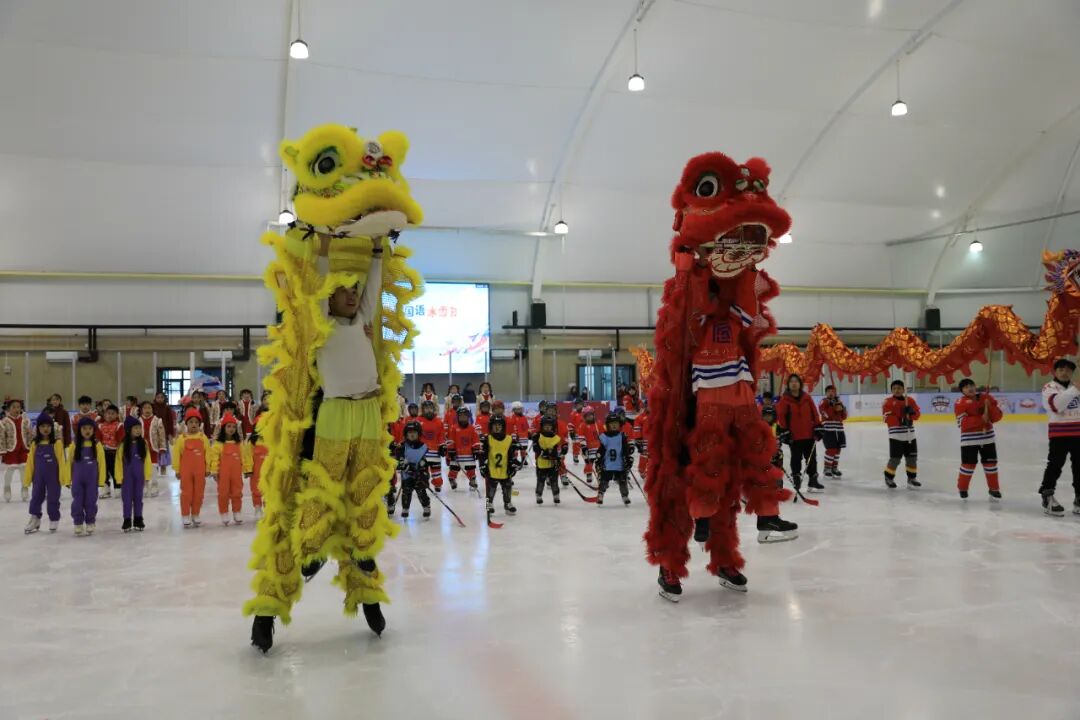
The opening show is the part of the day the students rehearse for weeks. A Grade 1 figure skating group opened with a programme called Little Flowers. The under-8 hockey players followed with an exhibition, the school’s advanced skaters performed a group dance and then a synchronised programme in a Chinese style, and a kindergarten hockey team played a short match that was mostly a demonstration of falling over and getting up. The primary school team closed the show with their coaches.
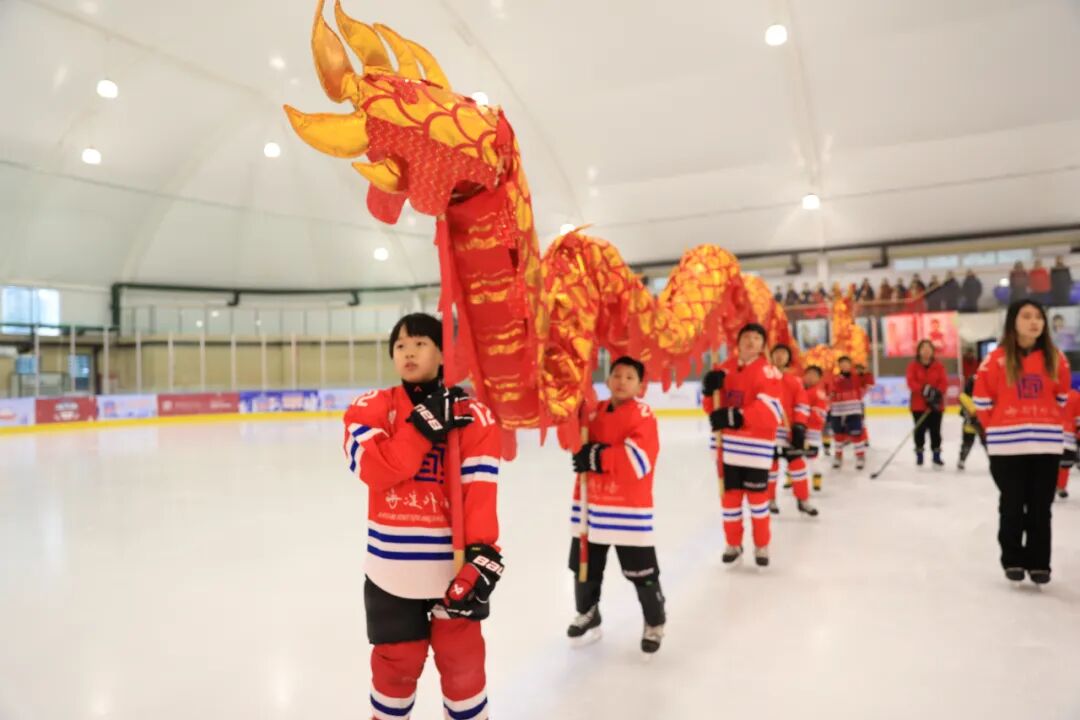
The festival’s signature, though, is the dragon. Two long puppets, carried at a run by students in skates, cross the ice in loops; behind them a procession of small hockey players in red jerseys carries a third dragon at walking pace. It is a Lunar New Year image transplanted onto a skating rink, and it works better than it has any right to.
Most of the children on the ice that morning will never compete seriously in a winter sport, and that is not the purpose. The purpose is that winter in Beijing is long, and a school with a rink and a slope can decide that it is a season to be used rather than endured.
It also explains the number of parents on the bank. A festival like this is a promise about what a campus is for, made in front of the parents who trust it and the children who use it.
The festival closes with a poem the school writes for it every year, about snow, memory, and a small train that carries students home over the hills. Read out at the end of a long day, over the noise of several hundred children taking their skates off, it lands better than a speech.