
Two Golds, Two Silvers: Sailing to the World Youth Championship
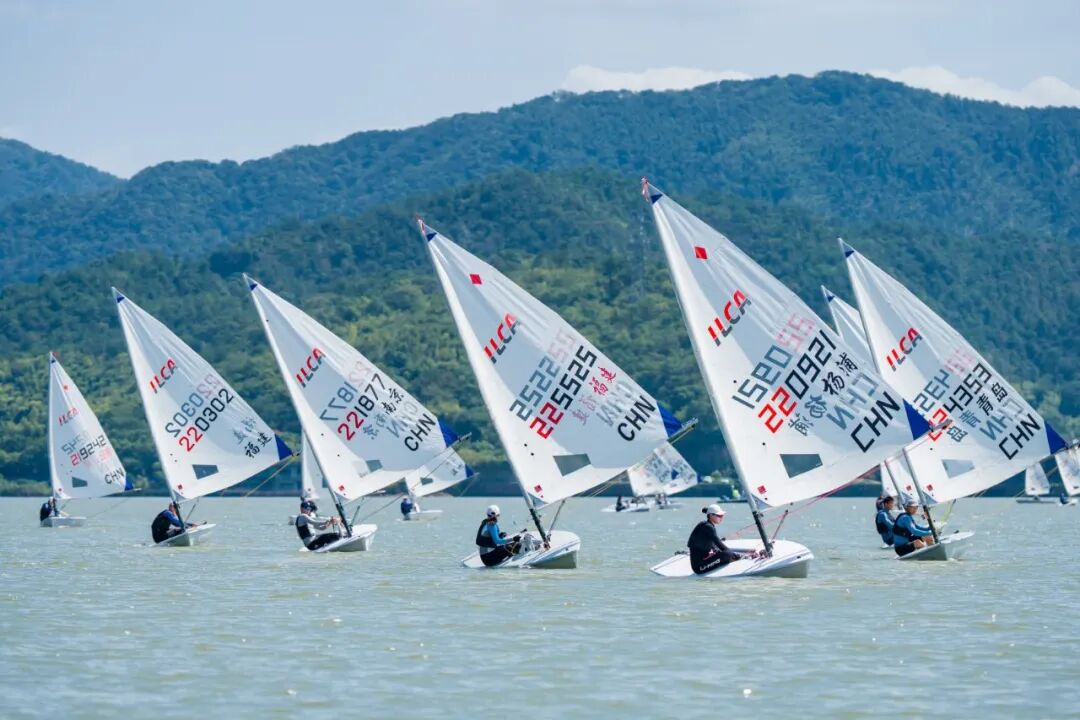
The 2026 National Sailing Championship finished at Dongqian Lake in Ningbo on 28 September, after seven days of racing in which 120 young sailors from 26 teams contested an A-class national event and, at the same time, a place at next year’s world championship.
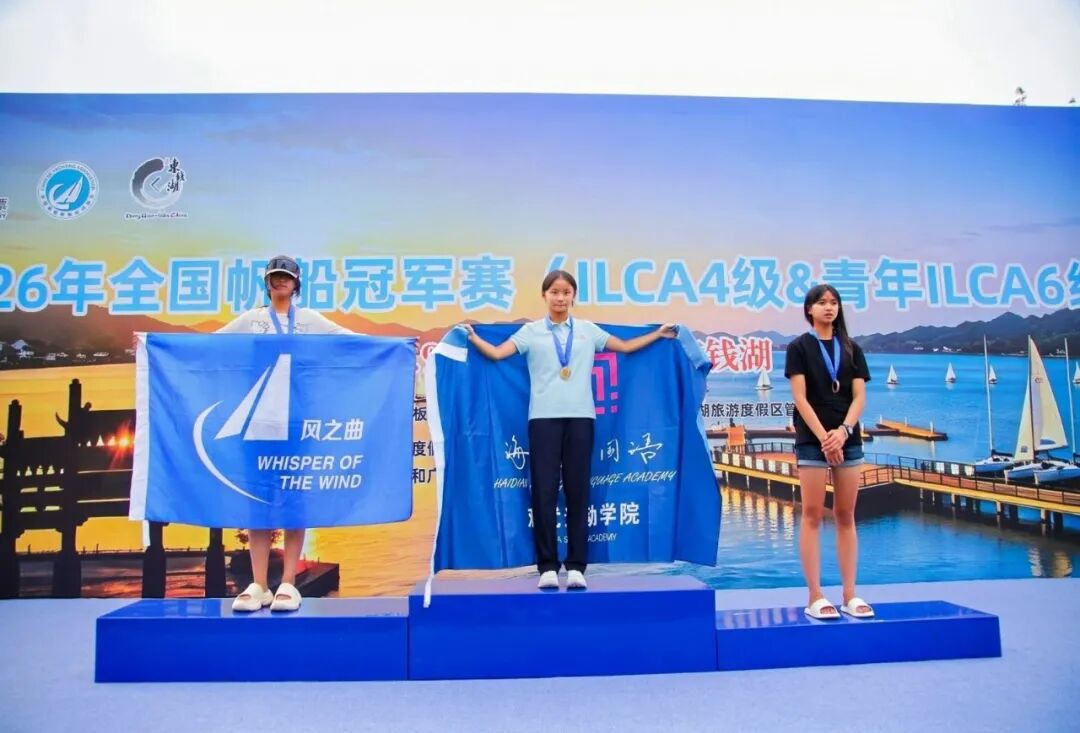
Cheng Wenyu, a student at the school’s Hainan campus, came away with four medals: gold in the women’s ILCA 4 long-distance race in both the A and B groups, and silver in both. The results also qualified her for the 2027 ILCA 4 World Youth Championship in Qinhuangdao, and a place on the national youth team.
The medal count is the least interesting thing about the week. Wenyu moved up from the Optimist to the ILCA 4 this year. Ningbo was her first major national event in the new boat, a stiffer, faster and considerably less forgiving machine than the one she learned in. Four medals in a first season in a new class is not a story about talent. It is a story about a transition that was planned.
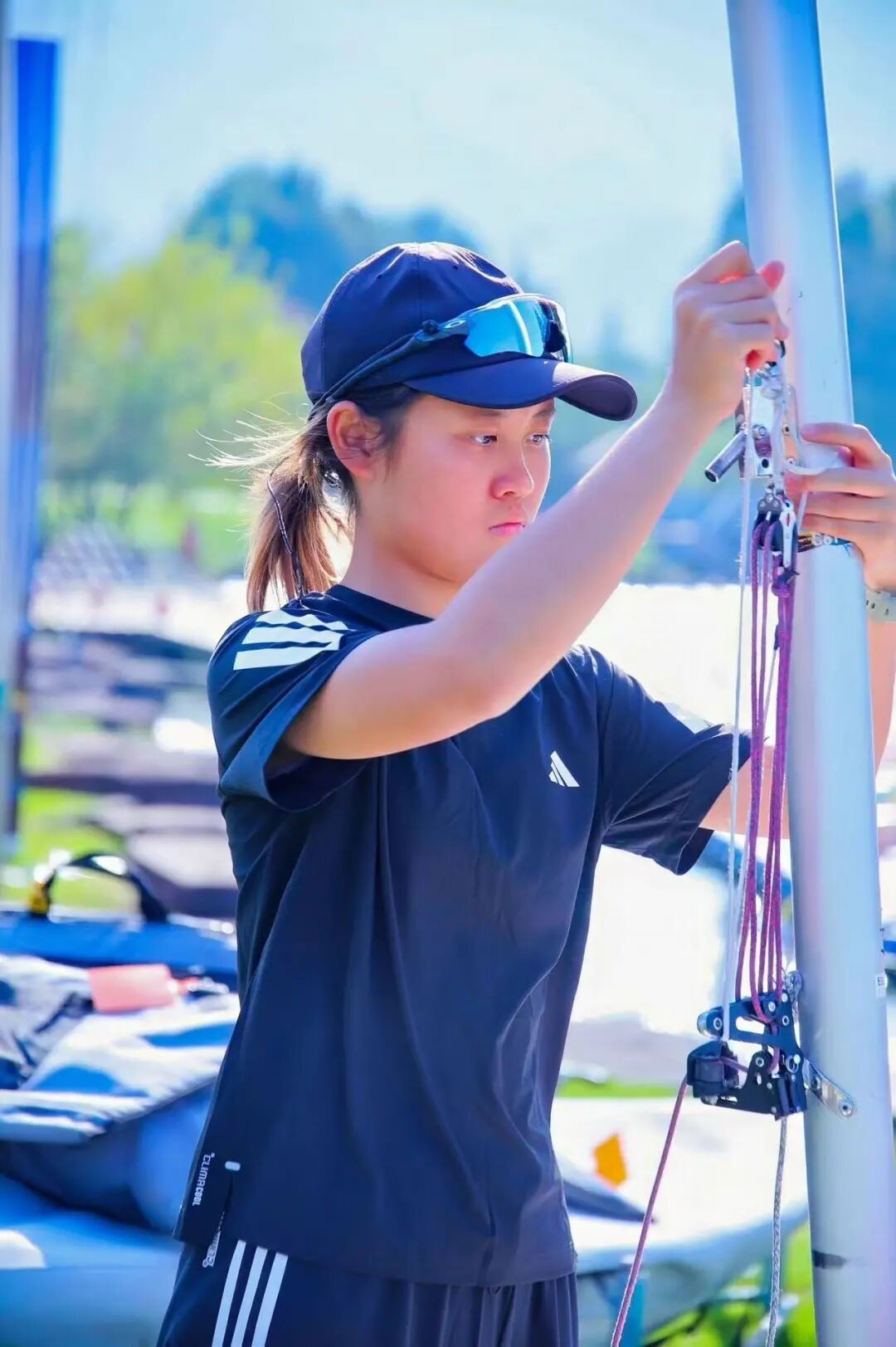
“The boat asks different questions,” her coach, Wu Linsheng, said. “The Optimist forgives you. The ILCA does not. It tells you immediately, in the middle of a leg, whether your weight is in the right place. We spent the spring on that, and on the wind here, which is light and shifty.”
Light, shifty wind is what Dongqian Lake provided across the seven days, and it rewards sailors who can read a course and then re-read it. Wenyu’s long-distance results, the two golds, came from exactly that: starting conservatively, working the shifts, and arriving at the top mark in the right third of the fleet.
Her teammate Liu Xia sailed the same regatta and did not reach a podium. She also, by her coach’s account, had the better week of the two in one respect. In the lightest race of the series, when the fleet parked and the results became a lottery, she kept her head, changed her plan mid-leg and finished inside the top ten.
“That is what we are trying to build,” Wu said. “The medals will come and go. A sailor who can be calm in no wind is a sailor you can send anywhere.”
Sailing is an unusual school sport because so much of it happens before the boat touches the water. Students rig their own masts, tie their own knots, hoist their own sails and keep a training log. Before a regatta they walk the course and write a race book, with the wind, the tide and the likely angles marked on it. On the water the variables are weather, water and nerve, and the school’s argument is that managing three variables at once is a form of thinking that transfers to a classroom.
The Hainan campus is the only water sports centre in Hainan certified under the Chinese Yachting Association’s small-boat training system, and the only school platform in the country with both a flat-water lake base and a sea base. It has 5,400 mu of sheltered water and 2.2 kilometres of coastline, a fleet that runs from Optimist and Topper through ILCA to multi-crew Omega and catamarans, a paddle tank, a theory classroom, a boat house, hot showers, a gym and a rehabilitation room. The coaching team is led by former national team sailors.
The pathway around it is the one the school uses elsewhere: interest first, then training, then a student-athlete schedule that keeps academic work intact. Sailing also happens to be one of the sports that universities with long nautical traditions, Harvard, Yale and Stanford among them, field teams in, which the programme mentions to parents without apology.
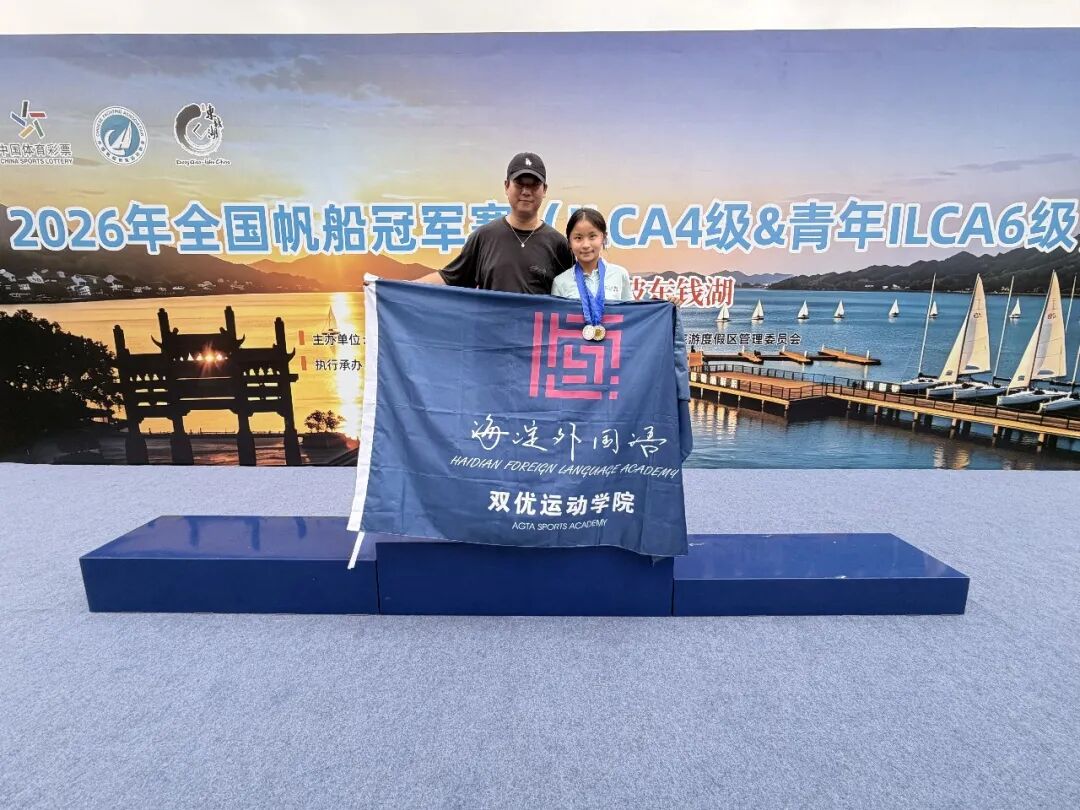
Her season is not over. There is a provincial games programme, an Asian beach games cycle, and next year, Qinhuangdao. The fleet she will meet there is the best in the world at her age. She will arrive with a race book, a coach who has been there before, and a first season in the class that produced four medals and one lesson: the transition is the training.