The Minutes That Count: Taige Zhu on Memory, Molecules and First Aid

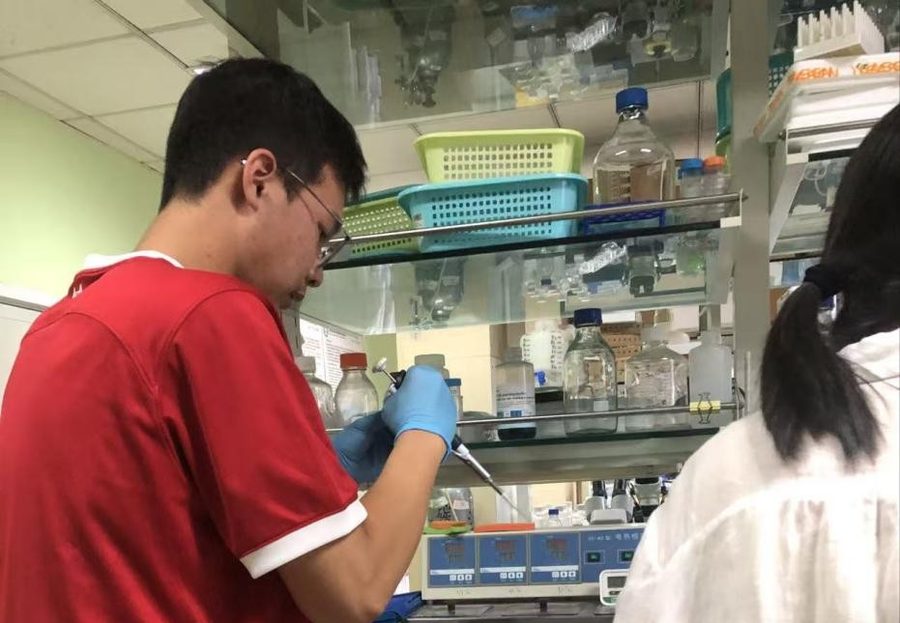
On a weekday afternoon, Taige Zhu stands at a laboratory bench with a pipette in his hand and a tube in front of him holding a volume measured in microlitres. The liquid goes in, the timer starts, the numbers go into a notebook, and the next tube is already waiting.
The subject is neurodegeneration — what actually goes wrong, at the level of genes and the proteins they encode, when nerve cells that have worked reliably for decades begin to fail. The field’s candidate answers are molecular, so the work is molecular too: prepare the sample, run the assay, read the result, and then do the whole thing again to find out whether the first result was real. Most afternoons produce a number that means very little on its own.
“You learn pretty quickly that a protocol is not a suggestion,” he says. Precision at this scale is not a personality trait; it is a habit built by repetition, and it is the reason a result from one week can be compared with a result from three months later.
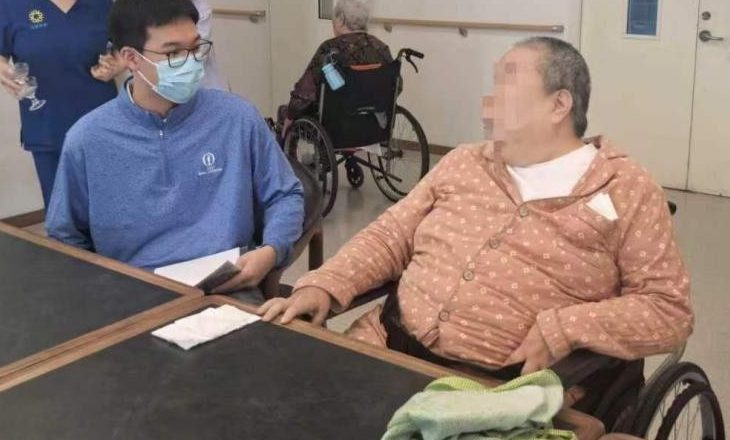
On Saturday mornings he takes a bus across the city to a care home, and the scale changes completely.
The residents he spends time with are living with Alzheimer’s disease. Conversations there do not run in straight lines. A story starts in one decade and arrives in another; the same afternoon is described three times, each version slightly different; a name is misplaced and quietly replaced. Zhu’s job is not to correct any of it. He sits down, asks open questions, listens, and writes down what he can — the town someone grew up in, the job they held for thirty years, the song they still know all the words to.
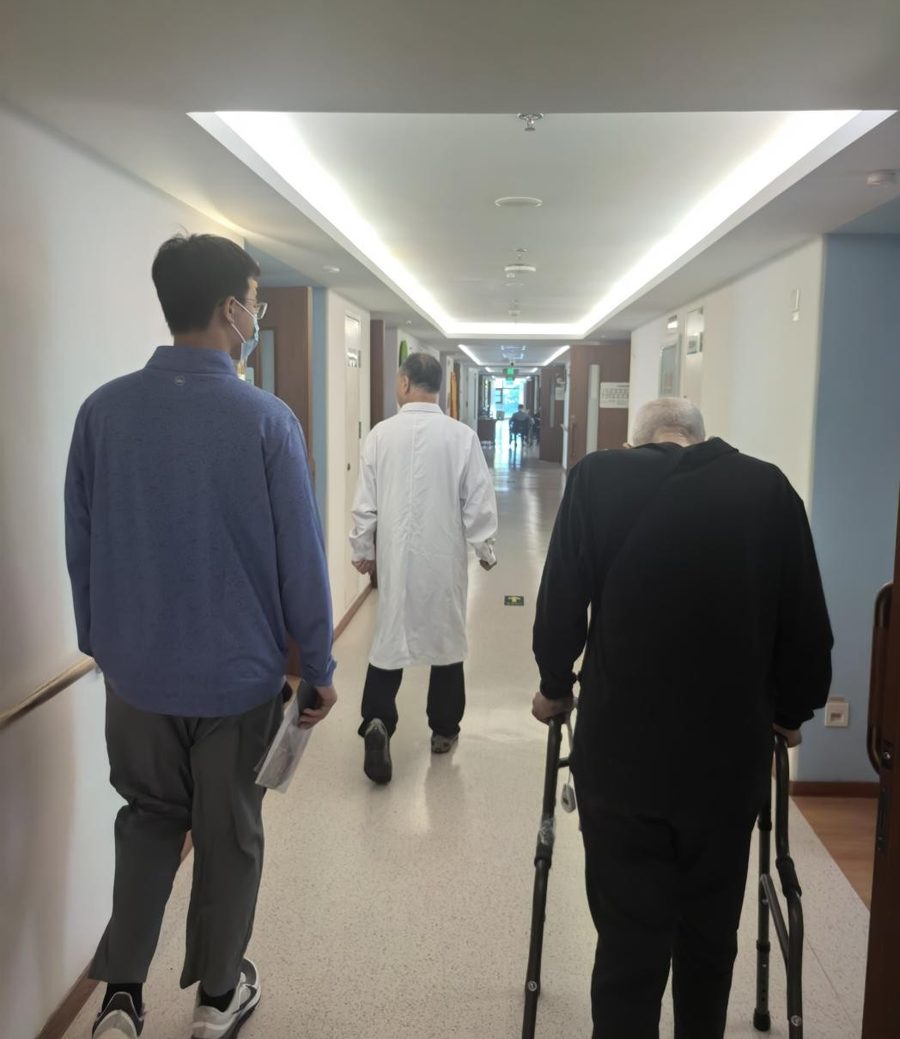
He calls what he collects their life stories, and he is deliberate about the word. A person with advanced Alzheimer’s is often described in the language of loss — what has gone, what no longer works. Recorded properly, the same person is also a body of memory that is still there, just harder to reach.
That is where the two halves of his week started to argue with each other. In the lab, disease is a mechanism: a pathway, a protein, a measurable change in a tissue sample. In the care home it is a man who cannot find the word for his own street but remembers exactly how his father’s workshop smelled. “The pathology has no grandfather in it,” Zhu says. “The data are clean, and then you meet the person the data are about.”
The conclusion he draws is not that research matters less. It is that the two kinds of work answer different questions, and that a field which treats the second as decoration has misunderstood its own subject. A disease that takes ten years to unfold is lived one afternoon at a time, and someone has to be in the room for the afternoons. Companionship, patience and the willingness to listen are not a substitute for a treatment. They are part of the care, and they do not become less necessary once a treatment exists.
The third part of his week started earlier, in ninth grade, when he completed the American Red Cross CPR & AED Program and earned the certification. Most students treat a certificate as an ending. Zhu treated it as equipment he was now responsible for, and founded a first-aid club at school so that the knowledge would not stay in one pair of hands.
He built the club into a small teaching operation: the sequence for cardiopulmonary resuscitation, the correct use of an automated external defibrillator, what to do when an airway is obstructed, and how to control bleeding and dress a wound. Each session ran the same way — a short explanation of why the step exists, a demonstration, and then supervised practice until the movement was automatic. Members trained their classmates and teachers, not just each other.
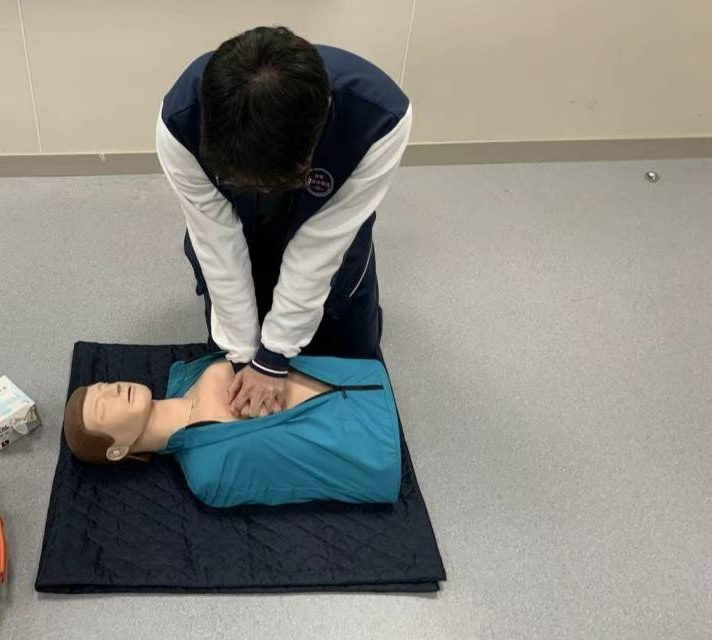
The reasoning behind the club is unsentimental. In an emergency, the person most likely to be standing there is not a doctor; it is whoever is nearest. What that bystander does in the first four minutes — whether anyone starts compressions, whether anyone thinks to send for the AED — changes the outcome more than anything that happens after the ambulance arrives. A school where thirty people know what to do in those four minutes is a materially safer place than one where nobody does.
Set the three parts side by side and they look like three different ambitions: a molecular mechanism, a recorded life, a trained bystander. They are the same instinct at three scales — pay close attention to what is failing, and stay in the room long enough to be useful. The bench rewards it with a result. The care home rewards it with a story. The club rewards it, one hopes, with nothing at all.